The Institute of Natural Products and Agrobiology (IPNA-CSIC) has opened an exhibition at the Museum of Science and the Cosmos in Tenerife, titled 'Smelling to Believe'. The exhibition aims to demystify and educate about the science behind smell, one of the most primitive and evocative senses, often undervalued and confused with taste.
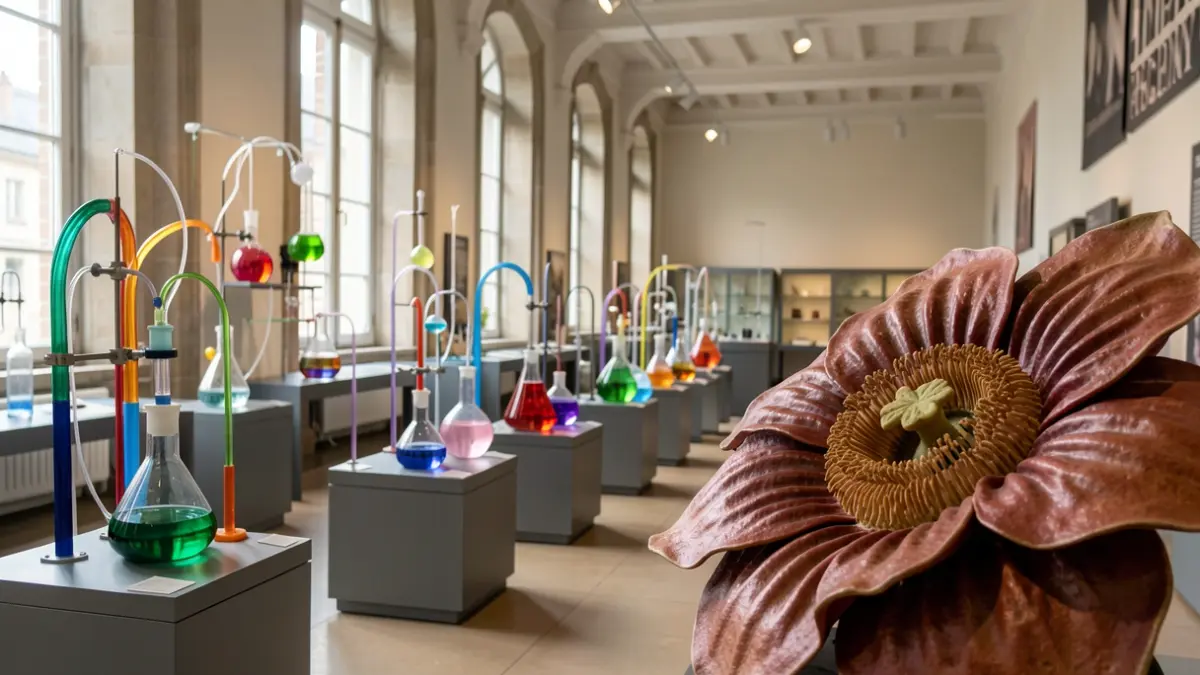
The exhibition, available until June 30, 2027, offers an immersive and multidisciplinary experience. Visitors can smell over 80 different aromas, presented in flasks, connecting to biodiversity, the cosmos, gastronomy, and the perfume industry. The exhibition highlights smell's connection to the brain and its ability to evoke memories.
Among the attractions is a life-size representation of the Rafflesia, the world's largest and smelliest flower, which uses its stench to attract pollinators. Collaborators such as the Museum of Nature and Archaeology (MUNA) contribute flora and fauna species that use fragrances as a strategic resource.
Researchers like Inés Martín and Rubén Barroso from IPNA-CSIC emphasize the chemical importance of smell and its influence on our decisions, memories, and emotions. The exhibition explains the difference between the orthonasal pathway (through the nose) and the retronasal pathway (from the mouth), both crucial for perceiving smells and flavors.
The exhibition also features demonstrations on the extraction of essential oils, both natural and industrial methods, underscoring that every smell corresponds to a molecule with a specific chemical structure.