A new study by researchers from the group Post-growth in Island Environments (Pensares) at the University of La Laguna examines the strengths and limitations of methodologies used for planning effective adaptation measures against climate change. The research, published in the scientific journal Climate Risk Management, presents a structured review of the indicators, scales, and potential biases employed to assess social vulnerability and design adaptation strategies.
Climate change causes unequal impacts, generating different levels of vulnerability among territories and populations. These differences stem from complex interactions between physical risks, socioeconomic conditions, and each community's adaptive capacity. The authors highlight that the diversity of methodologies used influences the identification of the most exposed populations and decisions regarding adaptation policies and measures.
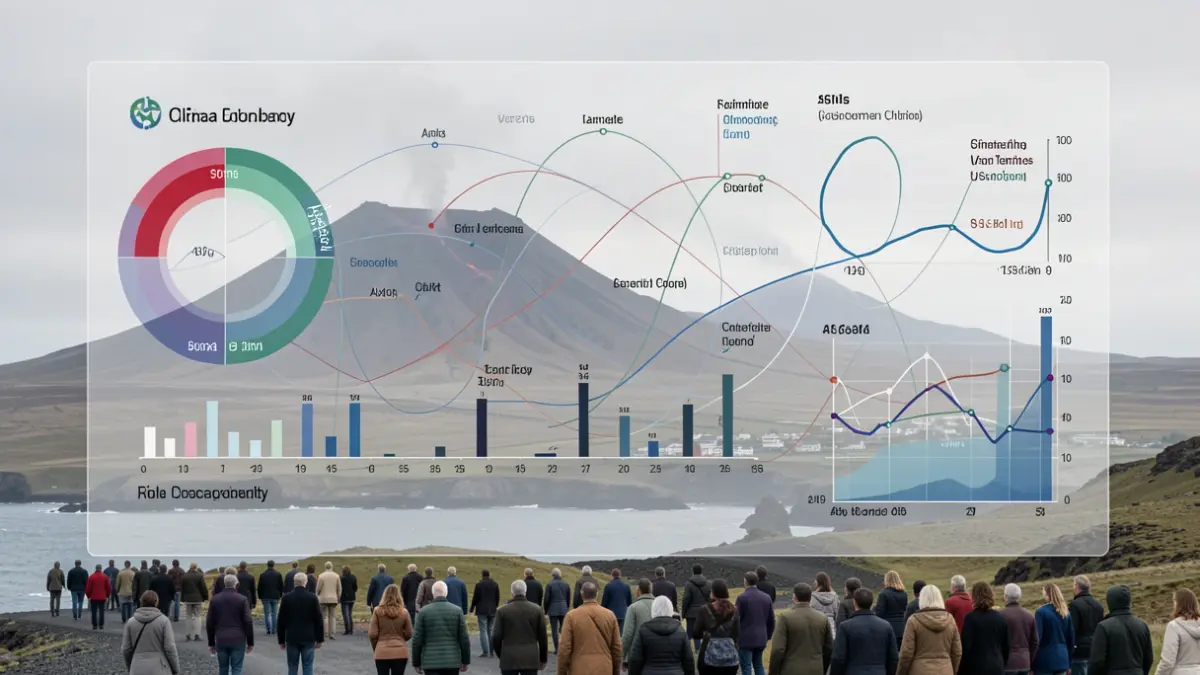
Through this review, researchers gathered empirical evidence on how social vulnerability metrics are constructed. They identified four interrelated technical patterns that condition the quality of these assessments: the data wall (heavy reliance on census data), residential bias (focusing only on residents), the rigor gap (scarce systematic validation), and scale mismatch (disconnection between spatial resolution and intervention implementation). These limitations reduce the capacity of current methodologies to reflect real vulnerabilities.
The researchers propose four practical priorities to improve these assessments. First, incorporate new demographic information sources like mobile phone data or tourism statistics. Second, institutionalize validation protocols to strengthen methodological rigor. Third, develop multi-scalar analysis frameworks to better connect assessment results with adaptation measures. Finally, methodologies should explicitly communicate the levels of uncertainty associated with their data and outcomes.
The acceleration of climate change effects makes it increasingly urgent to improve these tools, whose limitations can affect the effectiveness of risk management and the allocation of resources for adaptation. This review provides a diagnostic framework connecting methodological advancements with practical needs, offering an empirical basis for more precise climate risk management.
This study joins other advancements driven by Pensares, led by professor Serafín Corral. Among their latest projects is a collaboration agreement with the Government of Canarias to develop the first viewer of socioeconomic, demographic, and environmental vulnerabilities for the Canary Islands with municipal and even smaller census resolution, based on future climate scenarios. This initiative aims to provide a tool for identifying territories and groups most exposed to climate change impacts.