The ruling, issued on February 11, 2026, overturns the previous decision by the Directorate General of the Coast and Sea, which had denied the concession to occupy the public maritime-terrestrial domain. This verdict recognizes the municipality's right to obtain authorization, provided conditions such as respecting the right of way and obtaining discharge permits are met.
The administrative conflict began in 2011, when an application was submitted to regularize a facility that had been operating for decades without proper title. Although in 2018 the State itself proposed a conditional favorable solution, in 2022 it changed its criteria and rejected the concession. The arguments of the central administration included alleged incompatibility with the Coastal Law, the “deterrent” nature of fee collection, and potential impact on free access to the coastline.
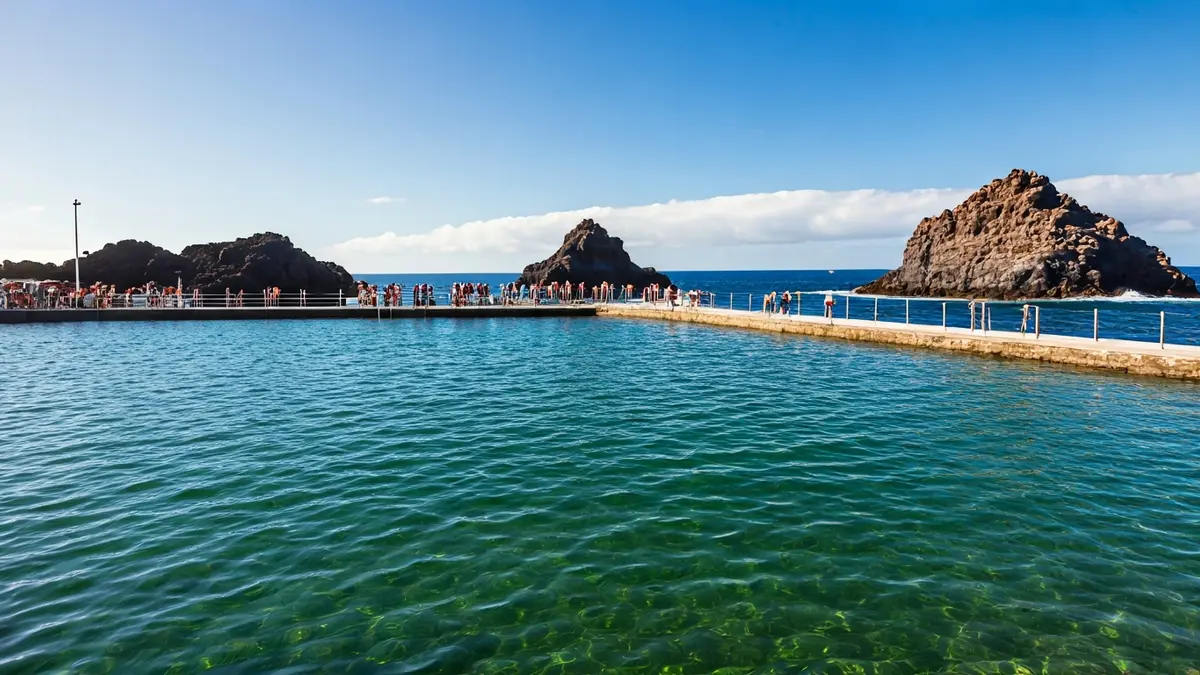
However, the Contentious-Administrative Chamber has dismissed these arguments, questioning the consistency of the state's actions after more than a decade of processing. The ruling emphasizes that these infrastructures are not mere sports pools, but a solution adapted to the reality of the Atlantic coast, allowing safe contact with the sea in areas difficult to access due to topography, waves, and depth.
These are not mere municipal pools (…) but facilities that allow enjoying the sea air and bathing in seawater safely.
The court highlights the anthropological value of these facilities, which are part of a deeply rooted tradition in the islands, alongside natural pools and rock pools. These infrastructures democratize access to the sea, especially for vulnerable groups such as the elderly, children, and people with functional difficulties, ensuring safe enjoyment of the sea “with minimal security”.
Furthermore, the ruling introduces the argument of the value of sea air and its health benefits, recognizing that the experience goes beyond bathing and is part of the island way of life. It also rejects the argument that charging fees limits public use, considering that these are not for profit and serve to cover maintenance costs, including discounts for certain groups.
This ruling sets a significant precedent for the Canary Islands, recognizing that such facilities are necessary for the use of the public maritime-terrestrial domain in the island context, provided conditions for free passage along the coast and discharge control are respected. The resolution emphasizes the need to interpret state regulations taking into account the territorial uniqueness of the islands, where the sea is an essential element of daily life, health, and collective identity.