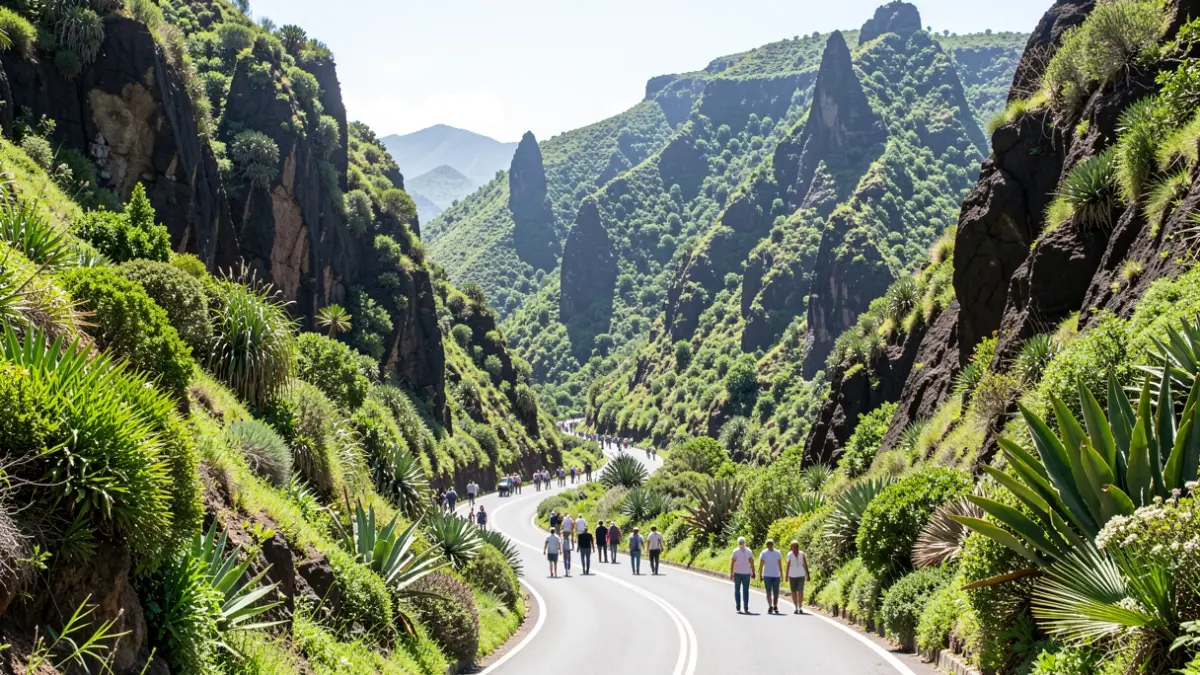
The Cabildo de Tenerife reported this growth, attributing it to the strategy implemented to minimize the impact of private vehicles in this protected zone. The island's Mobility Counselor, Eulalia García, noted that this trend reflects a shift in access habits to the natural enclave, emphasizing the Cabildo's collaboration with the municipalities of Santa Cruz de Tenerife and La Laguna to strengthen the bus network.
The reinforcement of regular routes has led to a 38% increase in available seats, rising from 1.3 million to 1.8 million over three years. Furthermore, the service's kilometers traveled have increased by 18%, reaching 651,000 last year from 555,000 in early 2023.
This growth reflects a progressive change in how this natural enclave is accessed.
Additionally, the Cabildo de Tenerife has allocated over 16.2 million euros since 2023 to mobility initiatives, infrastructure conservation, road improvements, road safety, and environmental protection. This year alone, projects worth 1.8 million euros are underway for road surface rehabilitation, slope stabilization, and signage renewal on Anaga's insular road network.
The Sustainable Mobility Strategy for the Anaga Rural Park, presented to neighborhood associations for their input, proposes 24 measures and 68 specific actions. The goal is to regulate access and reduce the pressure from private vehicles, structured around eight strategic lines including parking management, capacity control, active mobility, digitalization, and public transport.
Once the participatory process is concluded and the strategy is approved, the Mobility Council of the Anaga Biosphere Reserve will be established to coordinate administrations and evaluate the implementation of these measures.