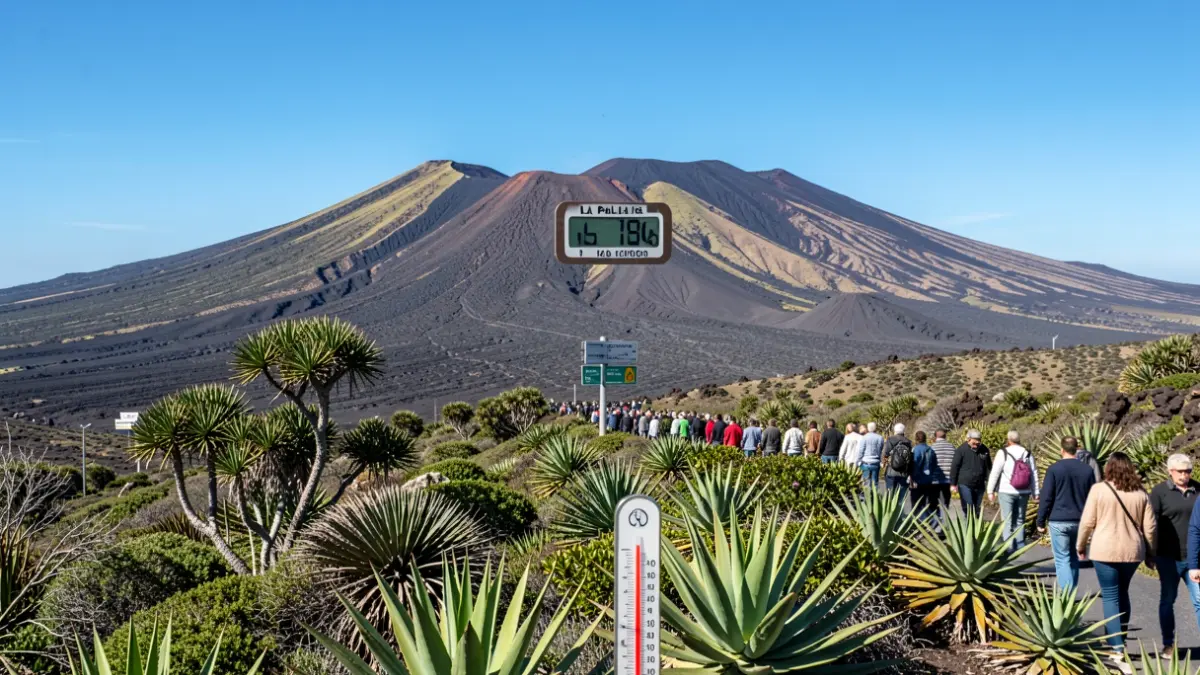
The temperatures that will trigger health alerts for heat in the Canary Islands will be lower starting this summer. The Autonomous Community's 2026 Heat Surveillance and Prevention Plan establishes a range from 27.3 degrees in northern Gran Canaria to 35 degrees in the summit of La Palma.
The regional government recommends in the document, released this Friday, maintaining adequate hydration, avoiding sun exposure during the central hours of the day, and reducing outdoor physical activity to prevent the effects of high temperatures on health.
Among the guidelines, it is advised to drink water and liquids frequently, even without feeling thirsty, and to avoid beverages with caffeine, alcohol, or high sugar content. Light meals such as salads, fruits, vegetables, or juices are also suggested to replenish salts lost through sweat.
Indoors, the plan suggests staying as much as possible in cool, shaded, or air-conditioned places, showering with cool water, using fans, and keeping the home cool by lowering blinds and awnings and ventilating early in the morning and at night.
Outdoors, it is recommended to reduce physical activity and avoid sports between 11:00 AM and 6:00 PM. It is important to wear light, loose-fitting, and breathable clothing, always seek shade, avoid sun exposure during the hottest hours, and protect oneself with a hat, sunglasses, and sunscreen when necessary.
The plan advises against strenuous physical efforts causing intense sweating during the hottest hours and reminds that people or animals should never be left in parked, closed vehicles.
Special attention is given to vulnerable individuals, recommending daily visits to the elderly who live alone or have reduced mobility, offering water frequently to babies and young children, and avoiding their sun exposure. It also advises reviewing medication and warning signs in people with chronic illnesses.
Medication should be kept in a cool place, as heat can alter its composition. Health services should be consulted if symptoms related to high temperatures persist for more than an hour, and information should only be sought from official sources.
Caregivers of the elderly should contact them at least twice a day. The plan establishes specific recommendations based on the risk level: mild (hydration, coolness, sun protection), moderate (reduce physical activity), high (cancel outdoor activities, use air conditioning), and extreme (stay in a cool place, even at night).
Public Health officials, José Díaz-Flores, Juan Manuel Méndez, and Elena López, presented the plan.
Regarding the 130 deaths attributed to heat in the Canary Islands last year, it was clarified that these are statistical estimates from the MoMo system, not direct heatstroke deaths. Approximately 3% would be from direct heatstroke, while the rest are due to health decompensation in individuals with pre-existing conditions, where heat contributes to the outcome.
The Director General of Public Health highlighted the need to reinforce public awareness regarding rising temperatures and ultraviolet radiation in the Canary Islands.
There were 428 hospital attendances related to heat in the last five years, with more than half concentrated between 2021 and 2023, the latter being the year with the highest incidence. The informational campaign 'In the Canary Islands, summer is pure happiness' will be disseminated through video, radio, and social media.