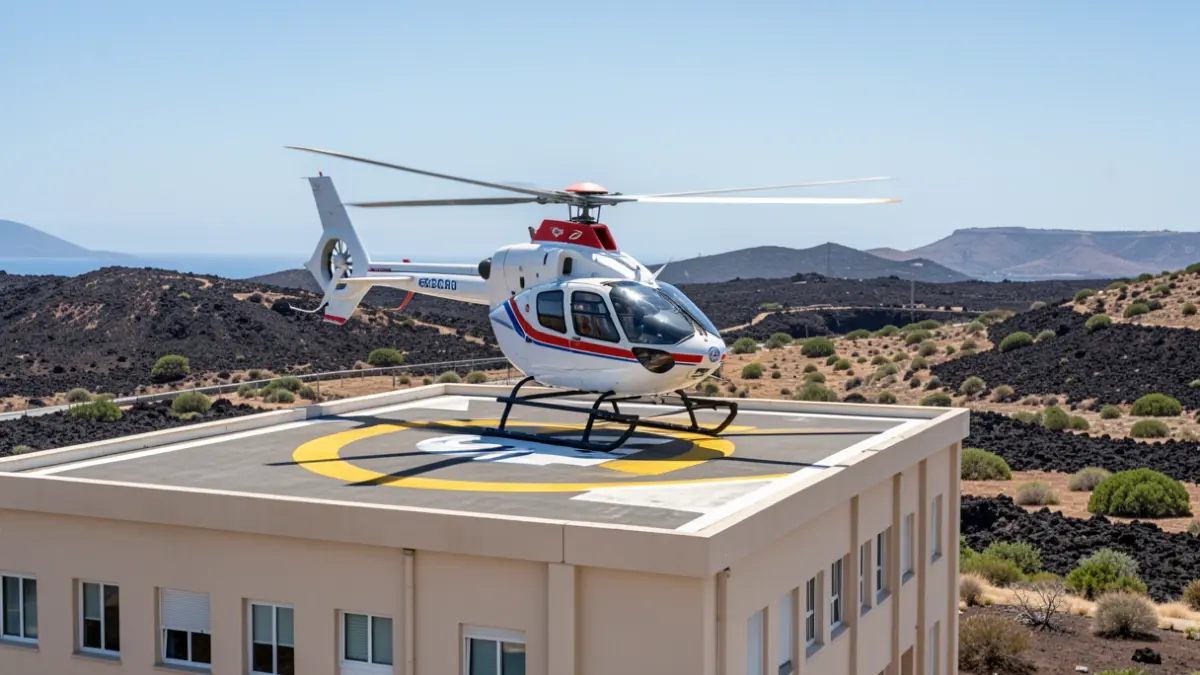
The primary type of transfer was cardiological. Last year, 57 patients were transferred to the Cardiology department and 45 to the Emergency department. August was the busiest month with 24 landings, followed by June (23) and April (22). February and December recorded the lowest activity with eleven operations each.
Nearly eighty percent of the patients transferred in 2025 came from La Palma, La Gomera, or El Hierro. Transfers were also recorded from areas of Tenerife and Gran Canaria. The medicalized helicopter landed 21 times at the HUC helipad to transfer patients or organs to other centers.
The aerial transport of patients significantly speeds up medical intervention in emergencies. The patient is conveyed via the tower on which the helipad is built directly to the Emergency department.
The Security service of the HUC coordinates the reception and takeoff of helicopters, ensuring the helipad's operational readiness and responding to potential accidents with its Specific Helipad Emergency Plan.
The Helicopter Reception Protocol is activated upon receiving a call from the SUC's health coordinator, with everything prepared for the helicopter's landing within a maximum of ten minutes. This includes verifying safety conditions, activating lighting, and informing the crew of wind direction and speed.
Simultaneously, the medical staff of the destination service is located to attend the helipad and receive the patient for immediate care. The building's structure allows for a rapid transfer to the hospitalization floors, ICU, Emergency, and Operating Rooms.