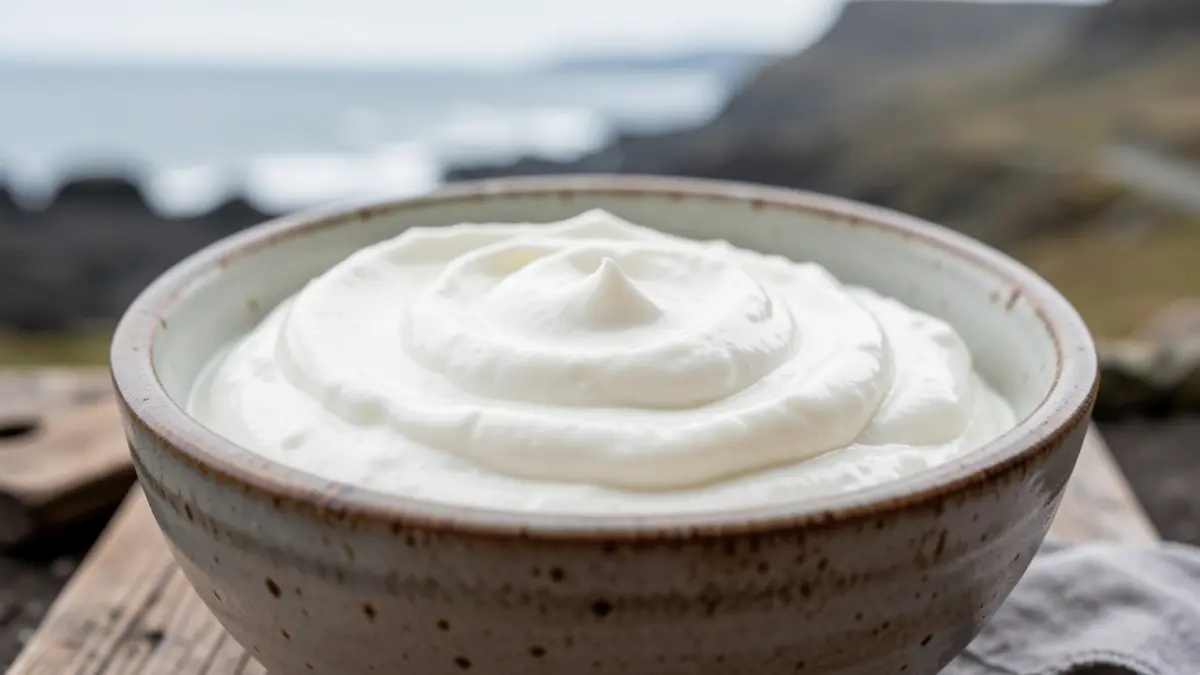
Skyr, a traditional dairy product from Iceland that resembles yogurt but has components closer to cheese, is gaining a presence on supermarket shelves. Its popularity is largely due to the growing trend towards healthy eating, standing out for its creaminess, slightly tart flavor, and culinary versatility.
This fermented food, similar to quark cheese or French fromage frais, is characterized by its homogeneous white color and very thick texture, with almost no water. Its origins date back to Iceland in the year 874, being a fundamental pillar in the diet of its inhabitants since the time of the Vikings. Its development is believed to be linked to the first Norwegian settlers, who adopted it as a concentrated source of nutrients essential for surviving in a harsh climate with limited resources.
Made from skimmed and pasteurized cow's milk, the skyr fermentation process involves specific lactic acid bacteria and rennet. After fermentation for eight to twelve hours, it is strained to remove the liquid whey, resulting in a dense paste. Interestingly, its production requires three to four times more milk than conventional yogurt.
Its nutritional profile is one of its main attractions: a serving provides between 11 and 19 grams of protein, almost double that of natural yogurt, and a minimal fat content (0-0.5%). It is also rich in essential vitamins and minerals such as calcium and potassium, making it an ally for strengthening bones and muscles. The straining process also significantly reduces its lactose content, making it suitable for many people with mild intolerance.
From its Viking origins to today's tables, skyr offers multiple culinary uses. It can be consumed directly, as a base for bowls with fruits and granola, or as a healthy substitute for creams and spreads in sauces and dips. In Iceland, its traditional use is as part of porridge or gruel.