Recent events have placed the Canary Islands in the international spotlight, but the history of the islands has already seen notable visits. Cardinal Eugenio Pacelli, later Pope Pius XII, visited Gran Canaria in 1934, touring emblematic sites such as the cathedral of Santa Ana in Las Palmas, the basilica of Nuestra Señora del Pino in Teror, and the church of San Juan Bautista in Arucas.
There is a popular belief that a young priest, Juan María Mastai Ferretti, the future Pope Pius IX, visited Santa Cruz de La Palma in 1823, even enjoying local sweets that would inspire the name 'pionono'. However, historical sources such as 'La misión del Vicario apostólico don Juan Muzi' and the chronicle by priest José Sallusti, a member of the expedition, do not mention such a stay on the island.
The potential misunderstanding stems from an initial stop in Mallorca, mistaken for 'La Palma' (Palma de Mallorca), the capital of the Balearic island with 20,000 inhabitants according to contemporary records. The expedition, organized by the Holy See to reorganize the Church in independent Chile, set sail from Genoa on October 5, 1823.
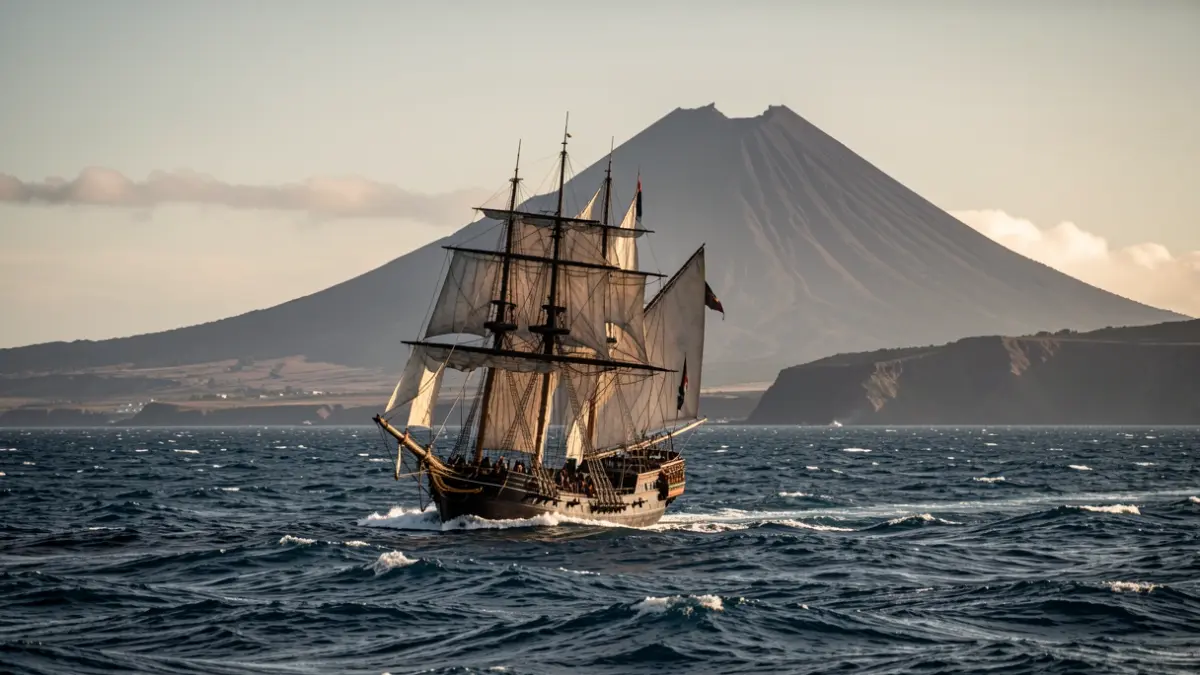
After a final stop on the European continent, the vessel departed from Tarifa on October 30. A storm forced a course deviation towards the Canary Islands. During the voyage, the cleric José Ignacio Cienfuegos, a key figure in Chilean emancipation, requested to disembark in Santa Cruz to recover from severe indigestion.
On November 4, the crew sighted the imposing silhouette of the Teide, described as the most beautiful mountain they had ever seen. Despite Cienfuegos's wish to stay in Santa Cruz, permission to anchor was not granted. The ship continued its journey, allowing Sallusti to capture his impressions of the islands.
The chronicles detail Gran Canaria as 'rich and mercantile', with a port defended by a strong castle. La Palma is described as fertile, with Santa Cruz de La Palma as a frequented port. La Gomera, rich in wheat, wine, and sugar, served as a provisioning point for Spanish ships. Fuerteventura is characterized as 'unfortunate', and El Hierro, the westernmost, noted for the first French meridian.
Tenerife, the largest and most fertile island, was discovered by Alfonso de Lugo. Its description highlights the majesty of the Teide and the surrounding countryside, culminating in the capital, Santa Cruz, a modest-sized town with a small fort.
The pontificate of Pius IX also had a significant impact on Canarian religious history. It was under his papacy that the Virgen de la Candelaria was definitively ratified as the patron saint of the Canary Islands, a process formalized in 1867 through a papal decree that consolidated the spiritual bond between the Vatican and the islands.