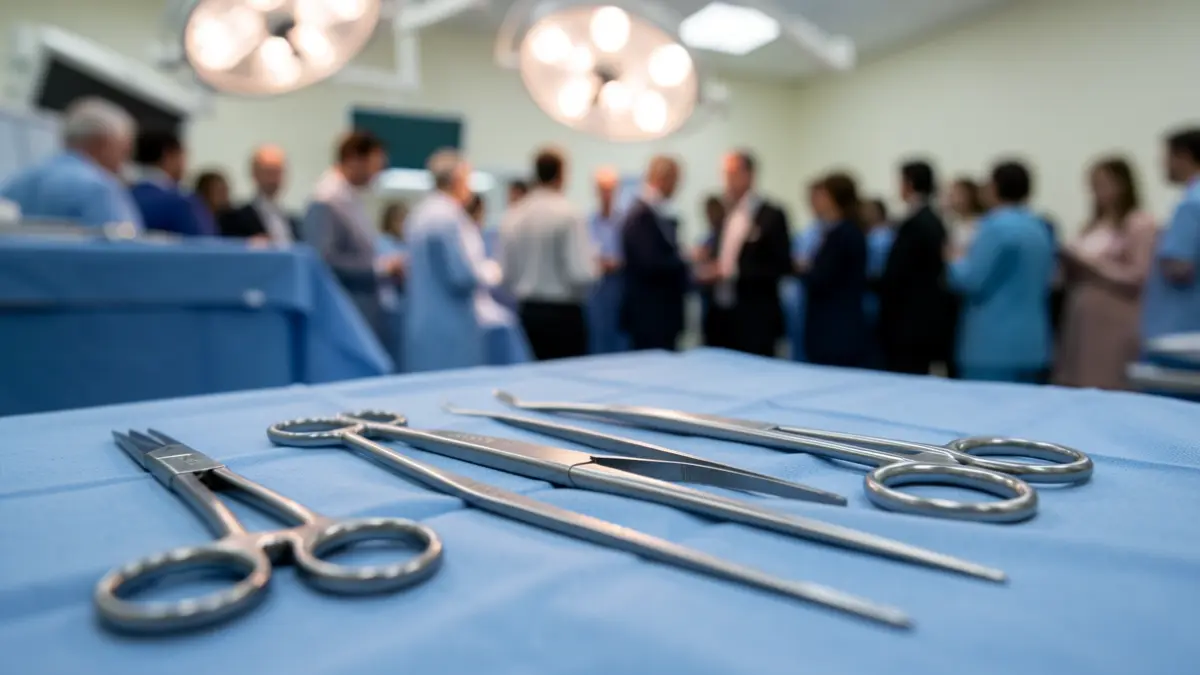
Fuerteventura General Hospital has marked a milestone in its specialized medical care by successfully performing a partial suprafacial parotidectomy for the first time. This surgical procedure, which involves the partial removal of the parotid gland, the largest of the salivary glands, was carried out on a 69-year-old patient with a benign tumor. The patient recovered favorably and was discharged after three days of hospitalization, with no impact on facial mobility.
A significant challenge in this surgery is the parotid gland's proximity to the facial nerve, crucial for facial movement. To ensure maximum safety, the hospital utilizes an intraoperative neuromonitor. This device provides real-time information on the facial nerve and its branches, enabling precise identification and preservation during the procedure. The surgical team, including specialists Silvia Martín, Ana Belén Vadillo, and Jelinek Falcón, highlighted the technology's effectiveness in minimizing the risk of irreversible facial paralysis.
The integration of this neuromonitoring equipment, just over a year ago, represents a significant advancement not only for parotid gland surgery but also for cervical and otological interventions, enhancing the safety of removing both benign and malignant pathologies.
The Otorhinolaryngology (ORL) department at Fuerteventura General Hospital, responsible for diagnosing and treating diseases of the ear, nose, throat, larynx, and related head and neck structures, has experienced remarkable growth. It currently comprises about fifteen professionals, including seven ORL specialists, allowing for the incorporation of increasingly complex procedures and reducing the need for referrals to external reference centers.
Last year, the department attended to 10,343 patients and performed 672 surgical interventions. Notable among these are surgeries of the upper aerodigestive tract for both pediatric and adult populations. In children, procedures for sleep apnea, such as tonsillectomy and adenoidectomy, and otological pathologies are performed. For adults, functional nasal surgeries like septoplasty and rhinoseptoplasty are common, along with dacryocystorhinostomy in collaboration with Ophthalmology, and the treatment of obstructive sleep apnea in conjunction with Pulmonology.