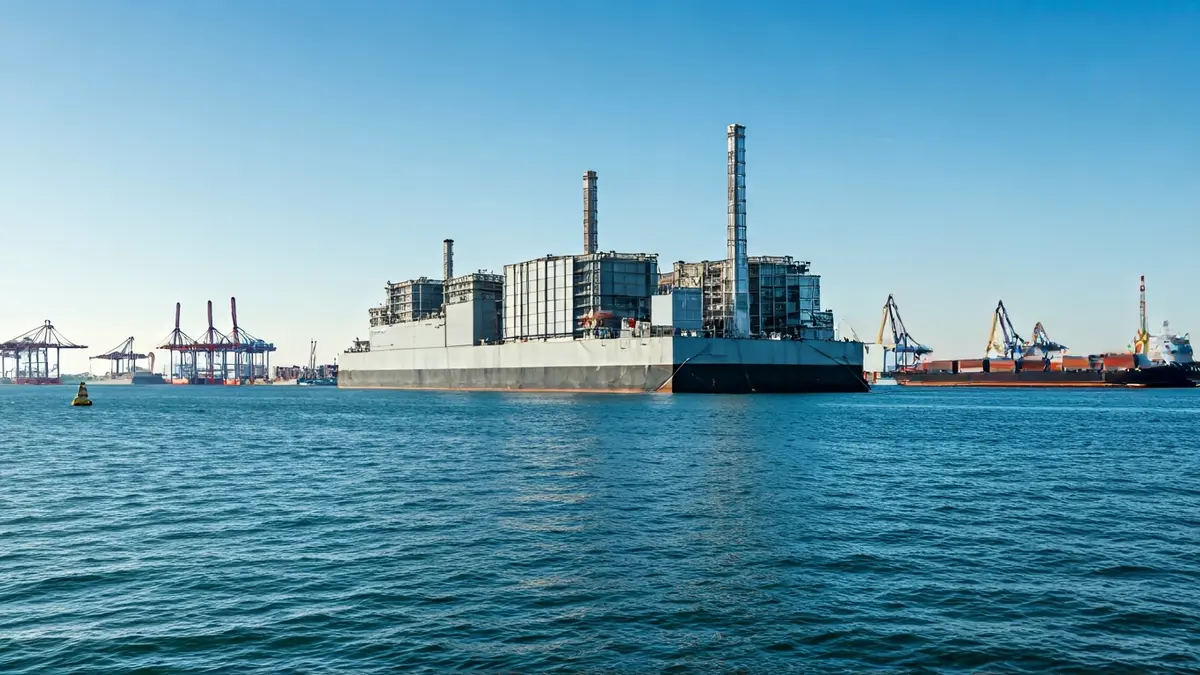
Mariano Hernández Zapata, Minister of Ecological Transition and Energy, stated that this floating power plant is the only viable short-term option to ensure the energy supply on the island. The measure arises from a “real risk” of a blackout, as explained by the minister during a parliamentary commission in response to a question from NC-bc.
The minister detailed that the vessel would provide 100 megawatts of “emergency” power, in a context where Gran Canaria's electricity deficit is estimated at 138 megawatts. Zapata emphasized that this is a “temporary and punctual” solution, comparing it to “lifeboats” used in critical situations to prevent a ship from sinking.
In addition to the floating plant, the regional executive is exploring other provisional alternatives. A nearly 20-megawatt plant is being processed in El Goro, in the municipality of Telde, currently open for public consultation, along with an additional 15-megawatt facility. These actions are part of the archipelago's “decarbonization” strategy, although the electricity system of several islands faces a “critical situation,” according to a report by Red Eléctrica.
“"Gran Canaria did not fare well in the last electricity tender because, as he explained, it does not cover the entire demand."
Zapata is confident that the State will call a new tender “imminently” for the renewal of thermal power plants, which could negate the need for the floating plant and emergency facilities if it covers Gran Canaria's real demand. He also highlighted the “sensitivity” of the Port Authority in evaluating the suitability of the floating power plant, although the final decision on occupying the port space will rest with that body.
The president of the Port Authority, Beatriz Calzada, had initially expressed concern in November about the potential incompatibility of the vessel with maritime operational safety, but requested more time for a thorough study of the project.