The debate surrounding the energy transition in Gran Canaria requires an in-depth discussion, moving beyond institutional slogans and self-serving simplifications. Reducing the issue to a generic call for “more renewables,” as Antonio Morales does, avoids the central question of which model is being promoted, under what territorial criteria, with what distribution of costs and benefits, and serving whose interests.
The acceleration of large energy infrastructures is presented as a climate commitment, yet in practice, it consolidates a centralized model. Energy production, distribution, and control remain in the hands of historical electricity sector operators, which does not guarantee a democratic and territorially balanced transformation.
The issue is not to oppose renewable energies. That would be a false dilemma. The point is that mere technological substitution does not by itself guarantee a transformation of the energy model if the economic and territorial power relations that have defined the conventional energy system for decades remain intact.
The Chira-Soria project is a prime example. Presented as strategic for island decarbonization, its implementation process has sparked a legitimate debate about its territorial, landscape, hydrological, and ecological implications. Furthermore, the political rationale behind a public investment exceeding 1,000 million euros is questioned, especially without considering the value of the destroyed territory and the rainwater freely ceded to REE for 75 years to strengthen the energy oligopoly.
In March 2019, a group of citizens, led by Julio Cuenca and Antonio González Viéitez, requested a public debate with international experts on the impacts in the Arguineguín ravine, but Morales rejected it. Today, the results demonstrate a centralized energy transition model that favors multinational electricity companies.
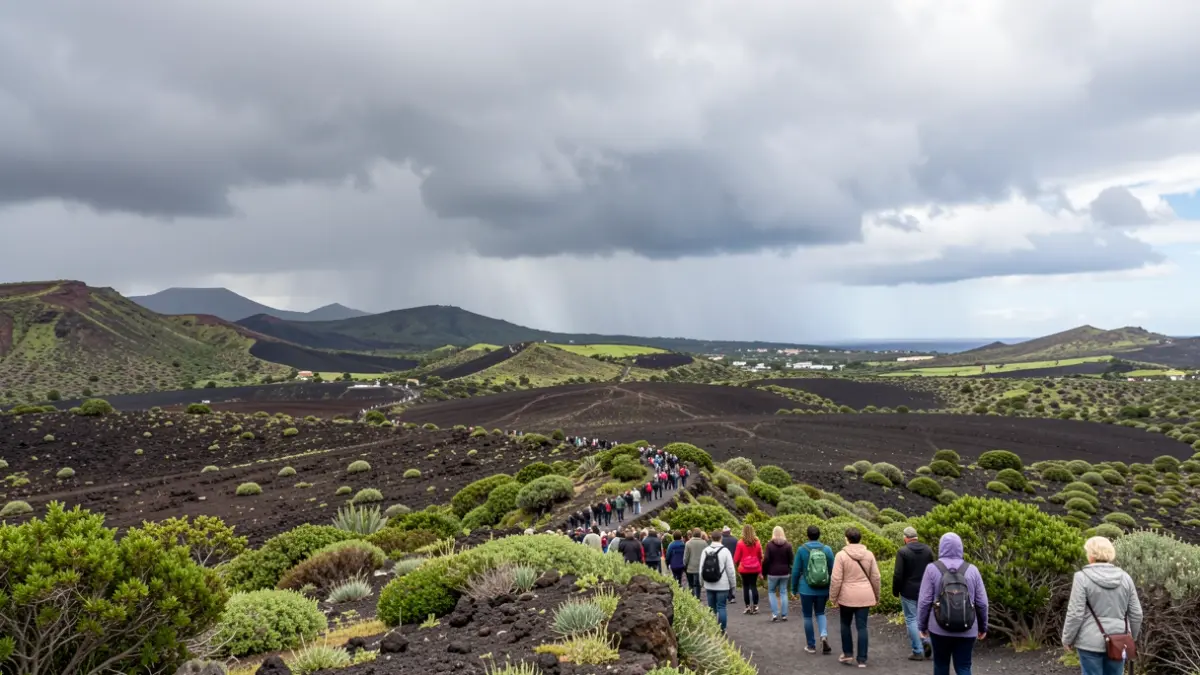
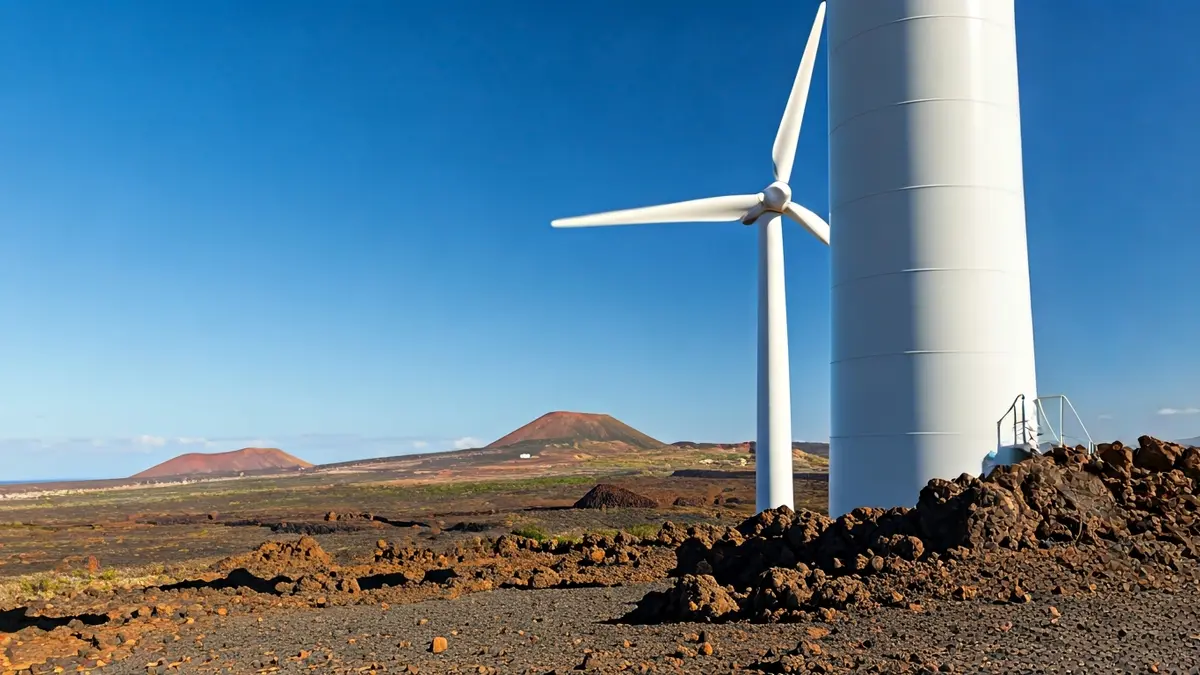
The expansion of large onshore wind farms, new evacuation lines, substations, and electricity transmission towers also fragments rural areas and alters ravines, multiplying cumulative impacts on a particularly fragile and limited territory. All this has been done without adequate strategic environmental assessment.
The discussion intensifies with the loss of rainwater from Chira-Soria and the imminent incorporation of offshore wind power. The speed with which an inevitability narrative is being pushed, without sufficient public deliberation on its effects on marine biodiversity, artisanal fishing, coastal landscape, and maritime spatial planning, is surprising.
It is concerning that the occupation of new natural and rural spaces is defended while the enormous potential for distributed generation on already transformed surfaces, such as residential rooftops, tourist infrastructures, industrial estates, parking lots, public facilities, and consolidated urban areas, remains underutilized. Prioritizing these areas would advance renewables, reduce territorial conflicts, minimize environmental impacts, and strengthen energy autonomy.
The limited support for self-consumption and energy communities, which embody a material democratization of energy, is a contradiction. The “eco-island” is simplistic rhetoric if not accompanied by a critical reflection on the implemented model. True energy transition requires altering the geography of power, democratizing access, decentralizing production, and subjecting all planning to rigorous criteria of territorial justice and public participation.