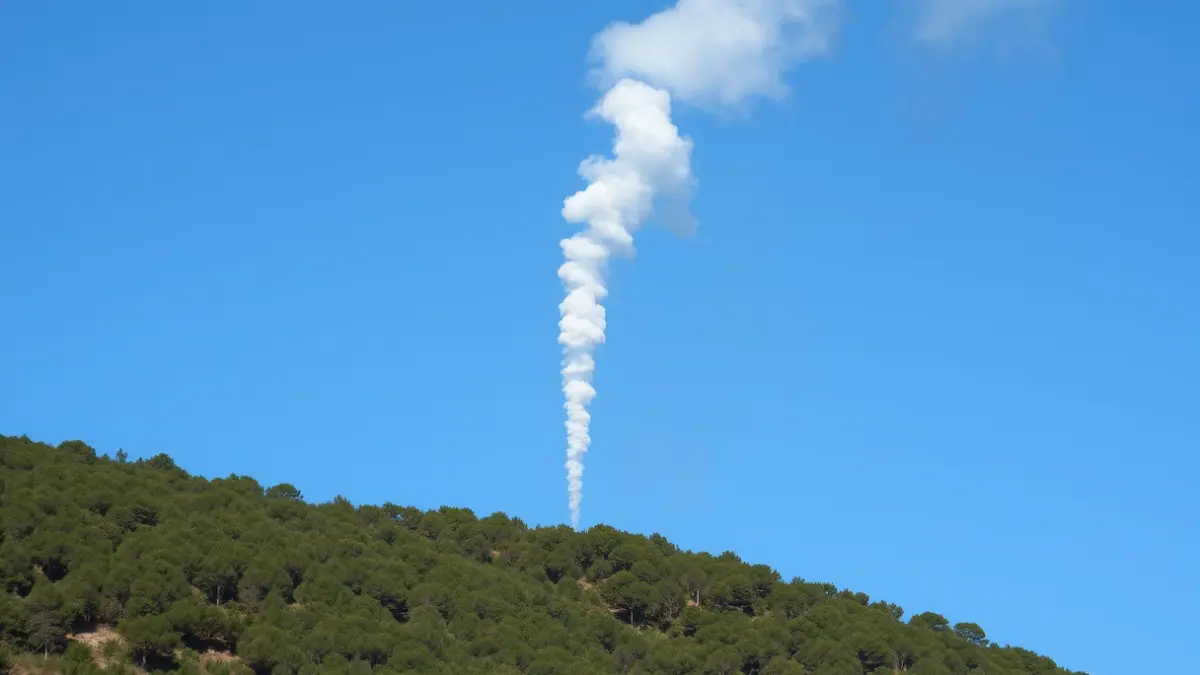
The area of Gran Canaria vulnerable to forest fires will increase this summer, as winter rainfall has extended vegetation to lower altitudes than usual. This green mantle, currently covering much of the island, will transform into rapidly combustible dry grasslands starting in July.
Given this situation, the fire prevention campaign for 2026 is expected to be reinforced. A spokesperson for Emergencies of the Cabildo de Gran Canaria indicated that a challenging summer is anticipated if the heatwaves of recent years recur. The key to mitigating the risk would be continued rainfall until June, keeping vegetation hydrated and delaying its desiccation.
“"The operation is facing social problems; the recruitment of forest firefighters has been significantly delayed, and the morale of the staff is a factor to consider, so efforts will be made to address their demands."
Gran Canaria has been one of the Spanish areas most affected by fire in the 21st century, with nine major forest fires since 2004. This has prompted administrations to professionalize extinction teams, increasing personnel and aerial resources. Preventive measures such as protecting rural homes, prescribed burns by Environmental Agents, and using animals for mountain clearing have also been implemented.
For this year's campaign, nearly twenty aircraft could be mobilized, including helicopters from the Autonomous Community, the State, and the cabildos of Gran Canaria and Tenerife, as well as an amphibious plane based in La Gomera. In more severe incidents, hydroplanes from the Peninsula would be called upon, such as those from the 43rd Group of the Air Force, which conducted drills in the islands last March.
Major fires in Gran Canaria have been intentional or caused by human negligence, exacerbated by heatwaves and the abandonment of rural areas since the 1970s. This latter factor has led to an accumulation of plant material in lands previously used for agriculture and grazing, posing a significant concern for the summer of 2026, following one of the wettest winters in recent years.
An Emergencies spokesperson detailed that extensive grass growth has reached areas close to the coast, extending down to 100 meters above sea level in some southern municipalities. This implies a larger area to monitor, as grass fires, though light, spread very rapidly.
Starting in June, a thousand people and nearly a hundred vehicles will be mobilized in Gran Canaria. Over 200 forest firefighters will be on the front lines, supported by approximately 400 Civil Protection personnel from the island's 21 municipalities and more than 300 firefighters from the Gran Canaria Emergency Consortium, along with security forces. At the autonomous level, the operation will involve 1,929 personnel and 208 ground vehicles.
However, the 2026 campaign faces an additional challenge: labor disputes over the working conditions of Environmental Agents. An Emergencies spokesperson acknowledged that the operation has social issues and that efforts will be made to address staff demands, some of which depend on the Cabildo and others on the Government of the Canary Islands.
The need for greater investment in prevention was emphasized, a task that must involve all administrations, including local councils, for clearing high-risk areas. The importance of citizen collaboration in mountain clearing was also highlighted.