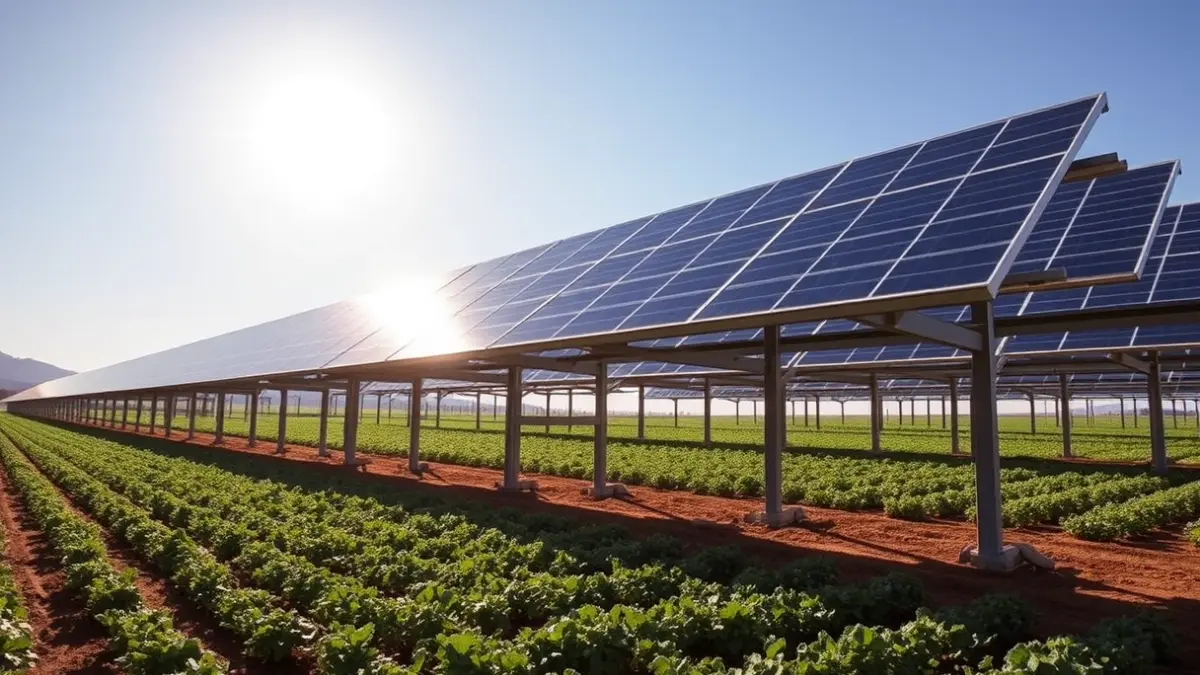
The Island Energy Council (CIE) of Gran Canaria has formally awarded Teican Medioambiental SL the contract for the installation of the first agrivoltaic plant on the island. This project, located at the El Galeón farm in Santa Brígida, represents an investment of 198,290.26 euros and was selected after a bidding process where its offer received the highest score.
The initiative, developed in collaboration with the Cabildo's Department of Food Sovereignty, includes the installation of 80 photovoltaic panels with a capacity of 50 kilowatts (kW). Additionally, it will feature a 107 kilowatt-hour (kWh) storage system, designed to optimize the use of energy produced directly on the farm.
It is estimated that the plant will generate approximately 70,421 kWh annually, an amount sufficient to cover the electricity consumption of about 20 households. This clean energy production will help avoid the emission of over 40 tons of CO₂ per year, equivalent to the effect of planting more than 2,500 trees.
Agrivoltaics allows for the installation of elevated solar panels over agricultural surfaces, ensuring no productive land is lost, improving microclimatic conditions for crops, reducing water and thermal stress, and generating clean energy for self-consumption, with a direct impact on the economic and environmental sustainability of farms.
This project at El Galeón is a strategic pilot plan aimed at demonstrating the feasibility of combining agricultural activity with renewable energy production. It seeks to advance energy transition, adaptation to climate change, and the strengthening of the island's food sovereignty. The results obtained from this plant will be used to evaluate its agronomic, energy, and environmental benefits, with the intention of replicating this model on other public and private farms in Gran Canaria, as the CIE has several agrivoltaic projects in various stages of processing.