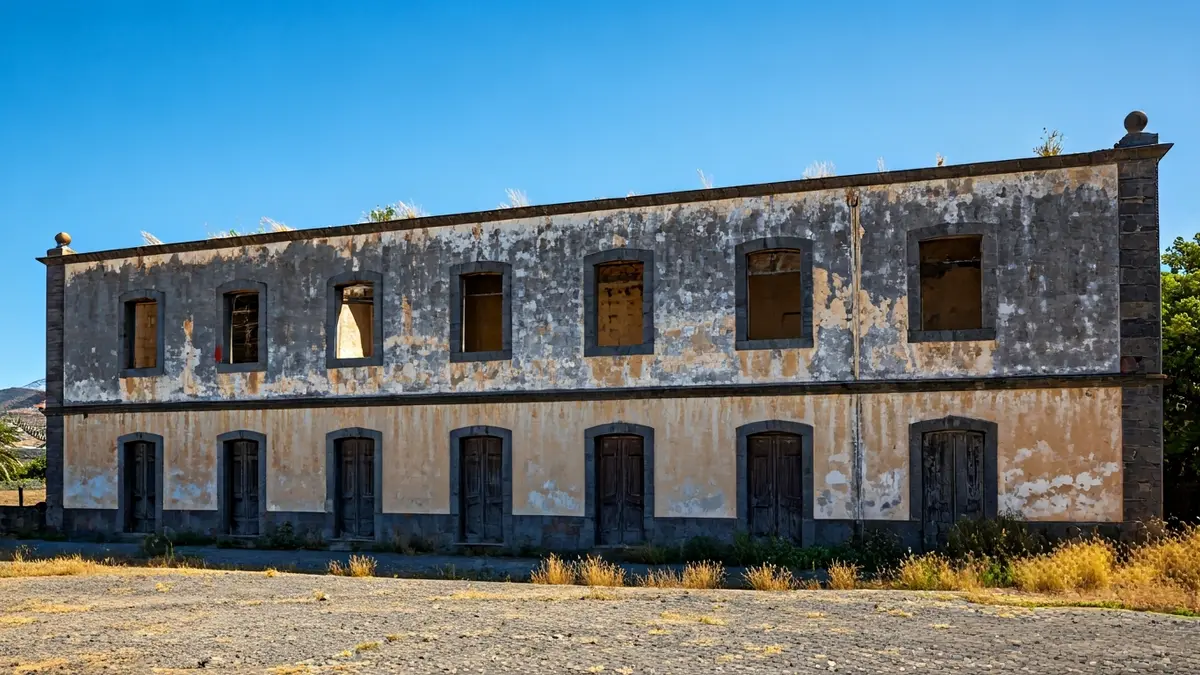
The property owner has requested the judicial eviction of the building known as Mr. Leacock's House, scheduled for June 30. Given the lack of a concrete solution for the residents, the Guía City Council has urged the Government Delegation, the Government of the Canary Islands, and the Cabildo de Gran Canaria to coordinate a response.
The local government emphasizes that the situation exceeds municipal capacity, prioritizing inter-administrative coordination to assist the vulnerable population affected. Figures reveal the scale of the problem: the Local Police estimate around 200 occupants, although only 79 are registered and eight use municipal social services. The City Council stresses the need to activate measures in public safety, specialized social care, child protection, public health, and temporary shelter.
Beyond the legal proceedings, the situation has significant human impact. Tami, a resident for four years with his wife and three children (aged 2, 6, and 10), describes how he has adapted the place, investing money to make it habitable. His concern is palpable, as he views the place not as a temporary refuge but as his home.
“"Where do we go?"
Tami, who arrived in Gran Canaria over two decades ago, argues that the occupation was not a choice but a necessity due to the difficulty of accessing affordable housing. His children are enrolled in school and actively participate in municipal life, adding to the uncertainty of their future if the eviction proceeds without an alternative.
Most residents are of Moroccan origin, including young people, seniors, and families with minors, many of whom have been settled for years. They describe a community of working individuals who have put down roots in northern Gran Canaria, forced into this situation by an inaccessible rental market. They differentiate between the lower part of the settlement, where families coexist peacefully, and other more problematic areas.
Mr. Leacock's House also holds historical and patrimonial value linked to the agro-industrial activity of David J. Leacock. The building and its surroundings, deteriorated by abandonment and occupation, have been subject to calls from heritage groups to protect its old sign.
Until June 30, Guía faces the challenge of managing this eviction without causing further harm to families already in a precarious situation, seeking an answer to Tami's question about his and his family's future.