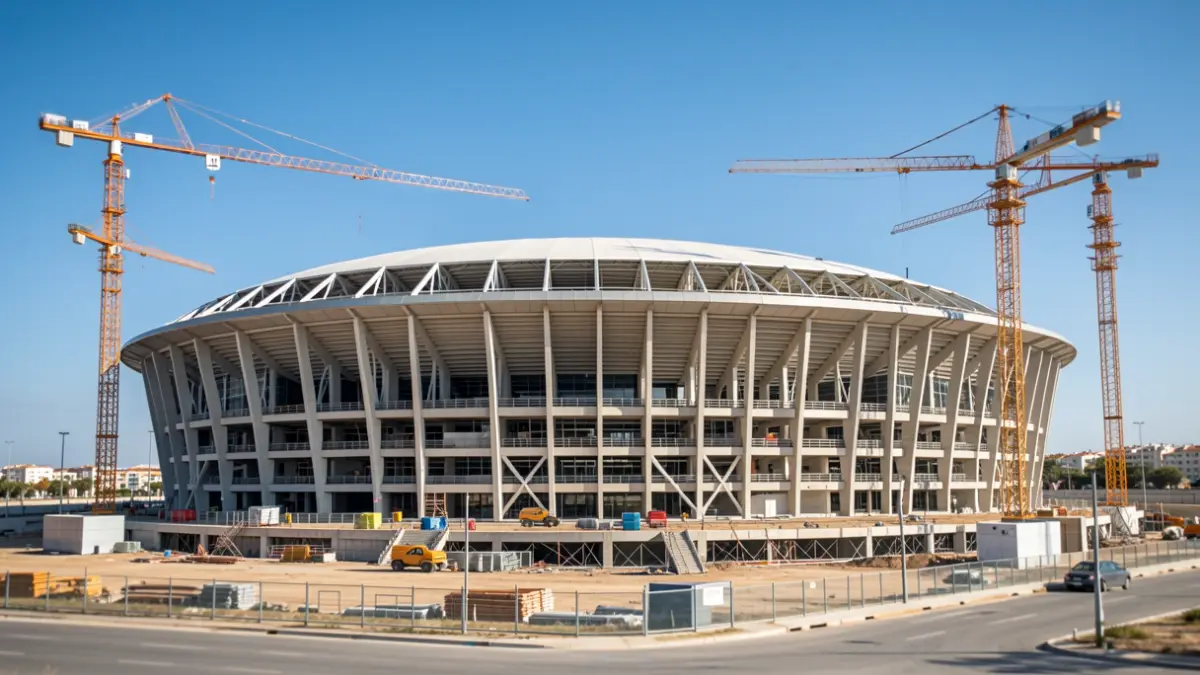
The Cabildo of Gran Canaria has initiated a second attempt to tender the expansion and renovation works of the Gran Canaria Stadium, setting a maximum budget of 234,801,620.71 euros. This new tender aims to attract interest from construction companies after the previous one, with a budget of 174,714,207.74 euros, was declared void. The execution period remains 36 months, crucial for the potential hosting of matches in the 2030 Football World Cup.
The increased cost of materials, due to the global geopolitical context, has led to a significant budget increase. The cost of the roofing alone amounts to over 93 million euros, considerably exceeding the 60.5 million announced in the previous process. The total material cost is estimated at 184,404,005.90 euros, while labor will require 46,719,317.17 euros.
Due to the elimination of this year's annuity from the financial planning, the start of the works is delayed until 2027. The works will be carried out over three annuities, with the aim of finishing in 2029, allowing a margin to overcome setbacks and comply with FIFA's requirements.
The tender includes a possible price revision during the contract's execution, given its multi-year duration (2027-2029) and the volatility of material costs. The deadline for submitting bids is September 11, and the economic offer opening is scheduled for October 15. The award will be based on the best quality-price ratio, with the proposed price contributing 65 points and the execution period 10 points.
The renovation will increase the stadium's capacity from the current 32,418 spectators to 44,022 seats, and will include new facilities. Among the innovations is a 'fog-catching' system integrated into the roof of the New Gran Canaria Stadium to capture and reuse water from ambient humidity, reducing reliance on potable water for non-potable uses such as irrigation and cleaning. The stadium will also comply with noise ordinances, with limits of 55 decibels during the day and 45 at night.
The Cabildo estimates that the economic exploitation of the stadium will generate a return of 300 million euros over the next 15 years.