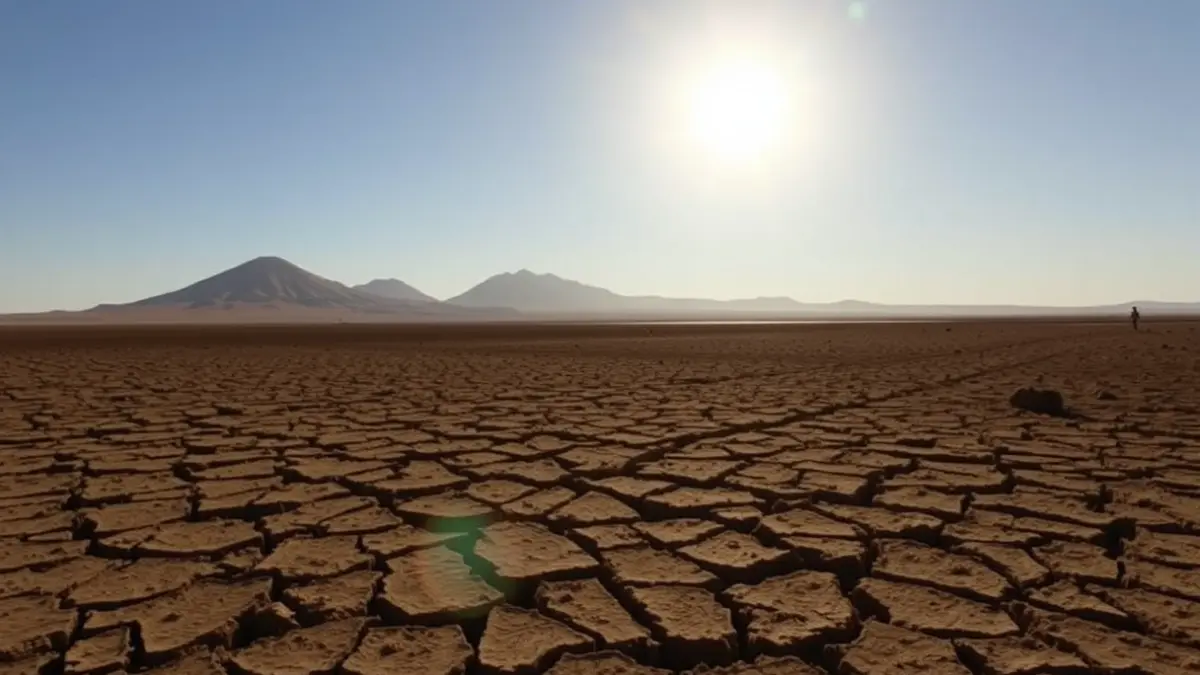
The research, utilizing the advanced FICLIMA method, anticipates a climatic transformation with a drastic increase in the frequency and duration of these phenomena until the year 2100. This analysis marks a point of no return in the meteorology of the archipelago, according to experts.
The study, published in the journal Regional Environmental Change, uses historical data to project how climate change will intensify maximum temperatures. It warns that the islands face a radical shift in their usual thermal stability.
“"While heatwaves currently tend to subside after 4 or 5 days, projections indicate that by the end of the century, the average will be 10 consecutive days."
This increase in the persistence of heat episodes represents an unprecedented challenge for public health and water management in the islands. The eastern islands, with Fuerteventura leading due to its proximity to the African coast, will register a higher frequency of these events.
Despite the eastern islands experiencing more heatwaves, the western ones, such as El Hierro and La Palma, will suffer higher maximum intensity, with peaks of up to +1.4°C during these events. This phenomenon is attributed to the interaction of abrupt terrain with atmospheric factors like thermal inversion, which enhances heat in mid-mountain areas.
ULL experts emphasize that the regional economy, heavily dependent on tourism and agriculture, is extremely vulnerable to these variations. Therefore, the report concludes with a call to action to optimize urban planning and water management, thereby protecting the most exposed sectors. This research is part of the European ARSINOE project and has been awarded the 2026 Chris Binnie Award for Sustainable Water Management.