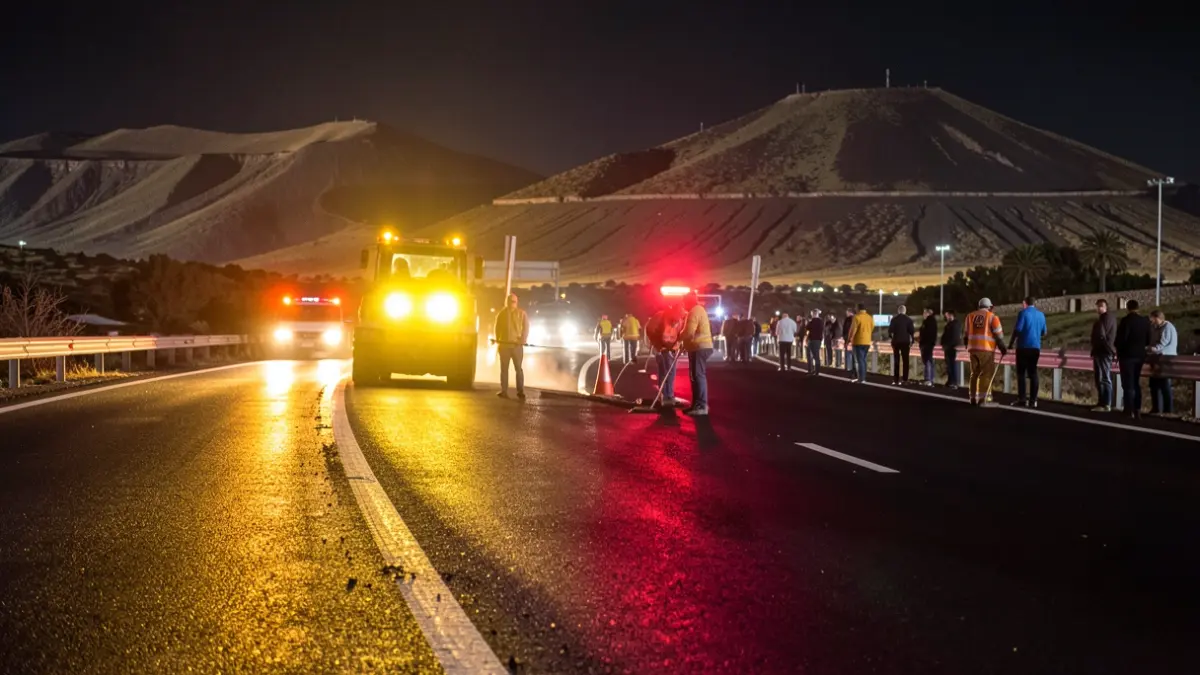
The intervention, with an investment of approximately 500,000 euros, aims to renew the surface of the island's main road, which carries between 55,000 and 80,000 vehicles daily on this stretch.
The work will take place at night, from 10:30 PM to 6:00 AM, Monday to Thursday, and will last for 10 nights. The operation will be carried out in phases to minimize disruptions for drivers, starting at kilometer marker 10, at the Melenara Interchange, and ending at marker 27, in the Llanos de Arinaga area and near the Sardina Interchange.
The first phase, starting on Monday, will focus on two kilometers between the Melenara Interchange and the Salinetas Interchange. During this stage, the GC-1 southbound will be closed from the Melenara Interchange, with diversions established via this exit towards Melenara and Salinetas to rejoin the highway.
The second phase will cover the stretch from El Goro to the Las Puntillas roundabout (Ingenio), passing the Airport. Diversions will be routed via exit 13 (El Goro industrial zone) towards Ojos de Garza (GC-195), with rejoining the highway at Las Puntillas.
The third and final phase, the longest, will run from the Las Puntillas Interchange to Vecindario. Drivers will need to take exit 18 (towards Carrizal-Ingenio), travel along the GC-191 to Balos and Vecindario, and then rejoin the highway via the Avenida del Atlántico.
Traffic closures will be implemented gradually and will be marked with informative signs at affected intersections. The Department requests the utmost cooperation from drivers and adherence to instructions from the Cabildo of Gran Canaria personnel working in the area.
The surface rehabilitation includes the removal of deteriorated pavement, the application of five centimeters of bituminous mix, and the replacement of horizontal road markings once the asphalt work is completed. Last year, a similar rehabilitation project was carried out on the northbound lanes, with an investment of 600,000 euros.