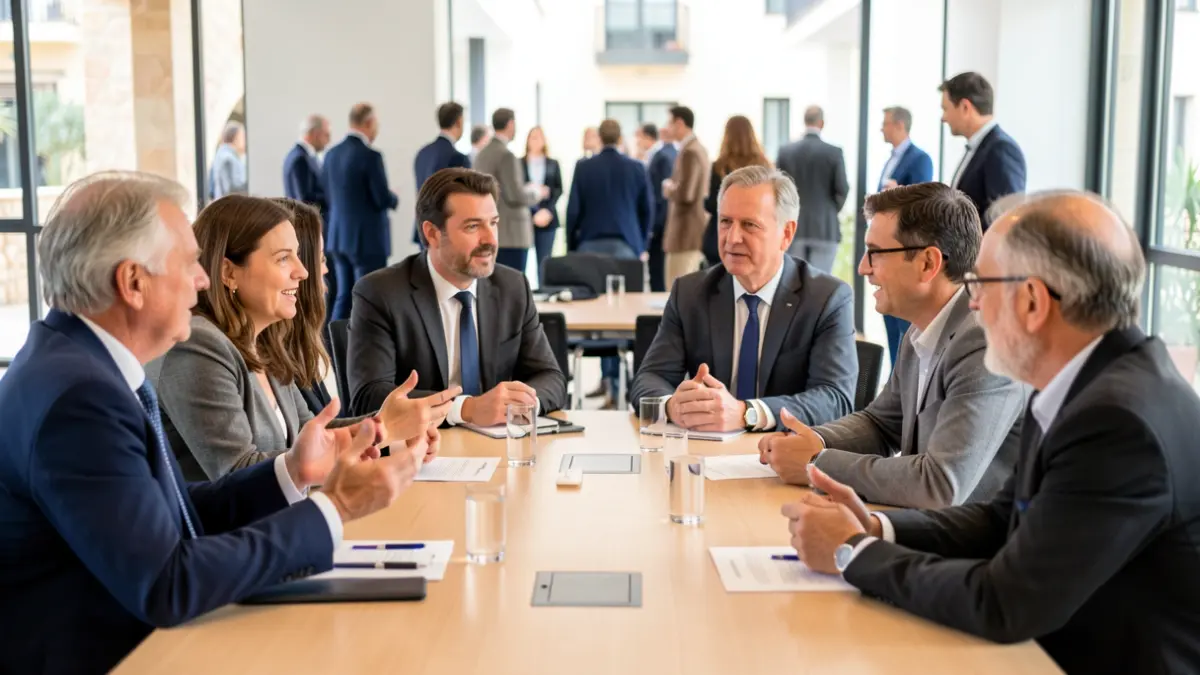
Sustainable mobility, accessibility, and the need to reclaim public space for people were the focus of the 'Streets for People: pedestrian, cyclist, and micromobility' roundtable, held on Wednesday afternoon, September 23rd, at the Casa de Postas as part of the ‘Ingenio Moves’ program for European Mobility Week. The event gathered representatives from various administrations and mobility specialists to share experiences, analyze current challenges, and propose solutions applicable to the municipal level.
Participants included the mayor of Ingenio, Vanesa Martín Herrera; the Councilor for Mobility and Transport, Óliver Navarro Guerra; the Councilor for Mobility of the Cabildo de Gran Canaria, Teodoro Sosa Monzón; the Director General of Transport of the Government of the Canary Islands, María Fernández Pérez, and professionals from specialized entities.
Óliver Navarro highlighted the importance of 'listening to the street' and translating that knowledge into municipal planning, raising challenges such as 'pooling a cycling network among the municipalities of the southeast along the coastal road, or developing the future train so that service roads allow shared use with cyclists and pedestrians to leverage that infrastructure'.
Teodoro Sosa advocated for participation as an essential element in designing mobility policies and recalled how urban planning has been car-centric for decades. He valued the shift towards a model that gives greater prominence to walking, cycling, and public transport. In this context, he also highlighted the increase in public transport in Gran Canaria following the implementation of free fares and pointed to the future Island Mobility Plan as a fundamental tool for organizing mobility actions on the island, incorporating contributions from various administrations and society.
Teodoro Sosa described the Villa de Ingenio as an 'example' in mobility, with a council 'that firmly believes in organizing, directing, and planning for the future'.
The Director General of Transport of the Government of the Canary Islands, María Fernández Pérez, emphasized that 'planning must stem from active listening' and agreed on the 'change of mentality to stop designing streets around the car'. She noted that at the regional government level, work is being done on planning tools like the Sustainable Mobility Law, where 'pedestrians, bikes, cars, and buses do not compete, they feed each other'. She mentioned the Sustainable Urban Mobility Plans that the City Council has executed with regional funding, such as pedestrianization and signage in school zones.
María Fernández Pérez concluded by expressing the idea of 'understanding mobility as a right', as the ability to move also conditions access to other rights and opportunities like employment, education, or healthcare. She advocated for planning that prioritizes people and connects different transport modes through coherent and continuous networks.
The mayor of Ingenio, Vanesa Martín, shared pedestrian improvement projects such as sidewalk lowering and emphasized education and awareness as fundamental tools for mobility transformation. She shared the experience of the ‘Cole en ruta’ program, which found that over 40% of participating students did not know how to ride a bicycle, highlighting the need to work on road safety education and coexistence between different transport modes from an early age.
The roundtable, moderated by Heriberto Dávila, director of the Fundación Islas Verdes, included participation from Silvia Casorrán (Network of Cities for Cycling), Ana Montalbán (Network of Cities that Walk), Belén Calahorro (Eurovelo Spain / ConBici), and Alba Albadalejo, an athlete and Spanish XCO champion.
The specialists agreed on the need for walking to occupy a central place in urban planning, suggesting that an accessible street should not only meet technical requirements but also offer adequate safety, comfort, shade, urban furniture, and direct routes.
The need to accompany physical transformations of public space with participation and pedagogical processes was highlighted, explaining that modifications like street pedestrianization can initially generate reluctance. It was noted that 'not all streets have to be for circulation,' but 'to make you forget you had to park the car ten minutes away, you have to make the transit pleasant, excite citizens with a beautiful image'.
The health impact of mobility was discussed, linking lack of safe movement to cardiovascular risks and hypertension, and its impact on mental health, as 'public space is, ultimately, social space'. Cycling was also presented as exercise and a 'vitamin'.
Regarding cycling, the debate highlighted the need for connected, safe, and quality infrastructure, preventing bike lanes or routes from becoming isolated projects. The importance of fostering coexistence and empathy among users of different transport modes was also stressed. The arrival of electric scooters was also a significant part of the discussion, with participants pointing out that these new forms of displacement are already part of urban reality and should be integrated into planning to ensure safe coexistence with pedestrians, bicycles, and vehicles.
The roundtable concluded with a shared vision on the need to move towards more accessible, safe, and friendly public spaces, where walking, cycling, public transport, or new micromobility systems can constitute real and connected alternatives.