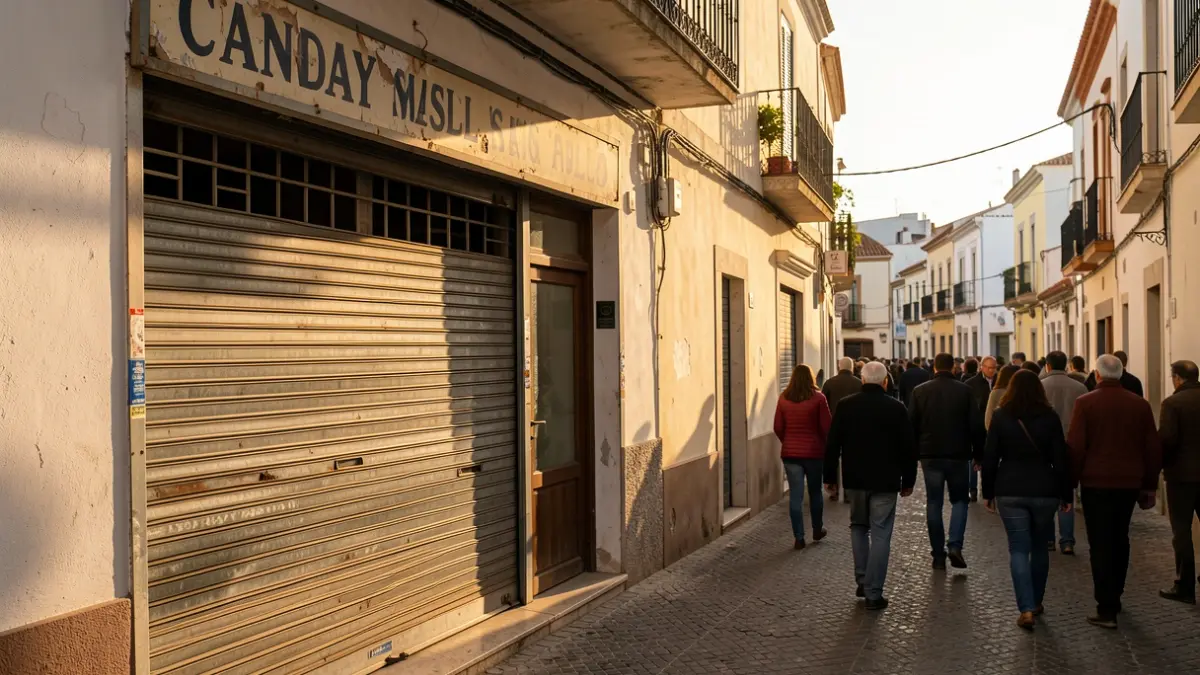
The downward trend in the retail sector in the Canary Islands is alarming, with an average of 200 'traditional' shops closing annually. These small businesses, which have supplied families in the islands for generations, are facing a significant decline. The total figure of 4,185 establishments that have permanently closed their doors in the last twenty years highlights the magnitude of the problem.
Several factors contribute to this 'commercial hemorrhage'. These include changes in consumer habits, the unstoppable growth of e-commerce, a lack of generational succession, and the inherent low profitability of many of these businesses. Added to these causes are the continuous operational cost increases, such as rent, salaries, and utility bills, which erode the economic viability of companies. Recent geopolitical instability in the Middle East has introduced a new layer of pressure through increased transportation costs.
This contraction of the commercial fabric in the Canary Islands aligns with a national trend, where shop closures in the last two decades are around 20%, with over 92,000 businesses disappearing across Spain. Analysis of data from the National Statistics Institute (INE) reveals that in the islands, the greatest impact is on businesses without employees, which have decreased by over 3,000 since 2015. Businesses with one or two employees have also seen a considerable reduction, totaling almost a thousand fewer. These figures underscore that small businesses, often sustained by self-employment or small teams, are the most vulnerable to competition from large corporations.
Abbas Moujir, president of the Federation of Urban Areas of the Canary Islands (Fauca), points out that the crisis directly affects the self-employed and micro-enterprises. Competition from e-commerce and high daily management costs make the continuity of many establishments unsustainable. Beyond direct costs for goods and supplies, managing regulations such as data protection or waste management generates additional fixed expenses. Moujir also highlights the lower productivity of small shops compared to large chains, which favors business concentration and the proliferation of franchises.
Paradoxically, the reduction in the commercial fabric coexists with growth in the sector's turnover since the pandemic, with uninterrupted year-on-year increases since February 2021. The sector in the Canary Islands accounts for 3.4% of national turnover, reaching 377 million euros in 2025. However, a recent slowdown is observed. Dependence on tourist spending is crucial for Canary Islands commerce, and a decrease in visitor numbers directly affects activity. Despite relatively low per capita spending on textiles, turnover remained high, but a 'certain retraction of tourism' is now noticeable.
The advancement of online commerce has been a determining factor in recent years. Changes in consumer habits, opting for low-cost online purchases, have severely harmed the sector. There is hope that the tax imposed by the European Union on these operations will help curb compulsive buying and benefit local commerce. Additionally, the war in the Middle East has increased transportation and freight costs, impacting the final product prices, a particularly heavy burden for Canary Islands micro-enterprises, which already face higher logistical costs due to their remoteness.
The lack of generational succession is another significant obstacle. Many business owners, especially the self-employed, cannot find a successor when retirement age approaches. According to Moujir, traditional businesses are not attractive to younger generations, who perceive them as 'archaic'. However, it is emphasized that owning a shop can be an appealing alternative for those who do not wish to depend on a boss, especially with digital transformation improving management. Customer acquisition has shifted; social media is now key for visibility and marketing, even if the final purchase is made in the physical store.