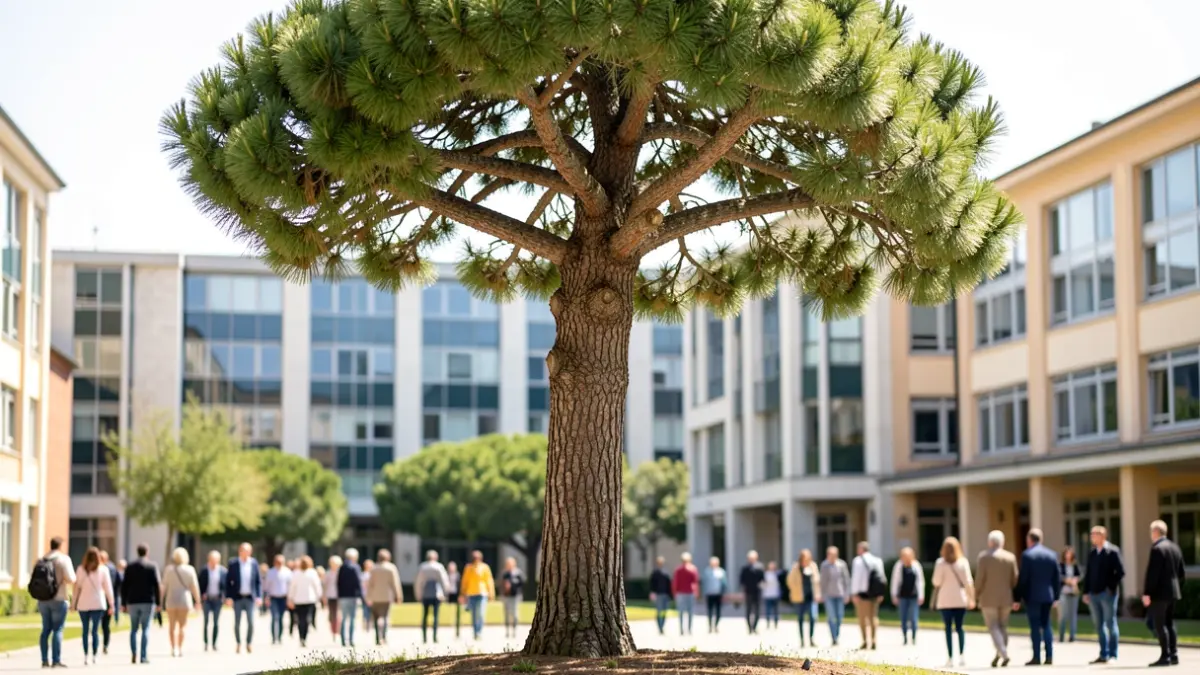
The academic institution becomes the sole participant from the Canary Islands in this edition of the campaign, which takes place biennially and reaches its second call in 2026. The proposal originated from the ULL's Parks and Gardens Service, with the goal of bringing the value of trees beyond their ornamental function to the university community.
The EUTreeTag campaign will identify over a thousand trees across 278 European cities. The installed tags will provide information on ecosystem services such as carbon dioxide stored, oxygen produced, and runoff water retained, calculated using the i-Tree tool.
For the University of La Laguna, eleven specimens have been selected across its campuses. These trees will represent the institution's vegetal heritage and its contribution to overall health and well-being.
Clemente de Nicolás Lozano, the initiative's promoter at ULL, emphasized the importance of publicizing lesser-known tree benefits, such as reducing heat on hot days. "It's not about having many more trees, but more tree coverage. Large trees that provide shade and slightly reduce the heat, which seems to be felt more each year," he stated.
The Vice-Rector for Sustainability and Infrastructure, Marta Domínguez, highlighted the environmental, social, and emotional value of these natural elements. She advocated for integrating trees from the initial design of future urban developments and cities, ensuring adequate conditions for their growth, water resource utilization, and shade provision, thereby contributing to reducing the carbon footprint and mitigating rising temperatures.
The eleven selected trees are distributed across various campus locations. The Central Campus features a Canary Island pine, an avocado tree, and a mastic tree. Other specimens include a mastic tree at the Faculty of Pharmacy, a ficus at the Higher Polytechnic School of Engineering, a serpent tree and a weeping willow at the Faculty of Medicine, a tipuana and an olive tree at the Guajara Campus, and a flamboyant tree at the Nautical Section.
The EUTreeTag labels allow users to locate the trees via a campaign map and consult associated information. The campaign also includes the dissemination of photographs and videos of the participating specimens.
EUTreeTag is promoted by thirteen European organizations, with the Arbocity Association driving its efforts in Spain. The ULL's participation aligns with its Environmental Sustainability Plan 2025-2027 and Sustainable Development Goals 13 (Climate Action) and 15 (Life on Land).