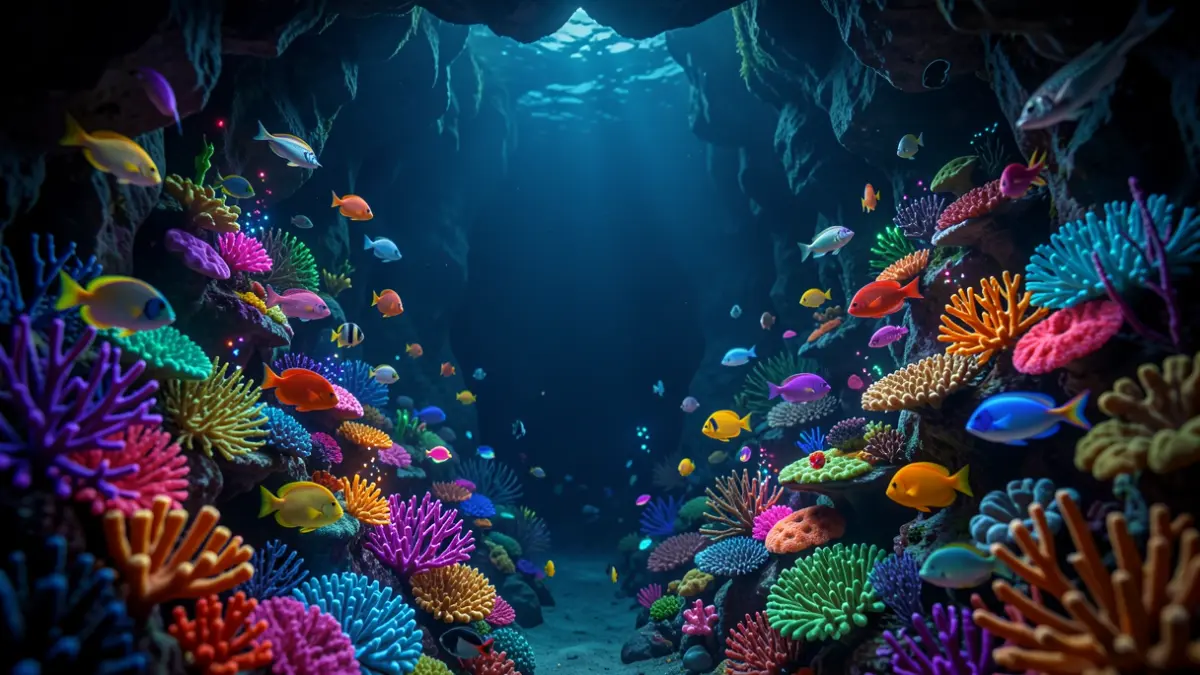
Life thrives even in the most remote and dark environments on the planet. At depths between 1,000 and 2,000 meters, the seamounts of the Canary Islands host a vibrant and complex ecosystem that serves as a refuge for hundreds of marine species. Researchers from the Spanish Institute of Oceanography (IEO) are beginning to unveil the secrets of these underwater volcanoes.
Preliminary data, collected aboard the oceanographic vessel Odón de Buen, reveal the presence of various species of sponges and corals, forming what researcher Pablo Martín-Sosa describes as "a very rich ecosystem." This biological richness rivals that of surface ecosystems, despite the absence of direct sunlight.
The depth at which these seamounts are located has kept them pristine and free from human pressure. "Being at such depths, they have not been subjected to human pressure, and that is noticeable in the ecosystems," states Martín-Sosa, highlighting their exceptional nature as a scientific oasis.
During a 21-day campaign, the Cansemos expedition team explored the southwest and northeast of the archipelago. A previous attempt two years ago was limited by the capabilities of the vessel Ángeles Alvariño to reach these depths safely. The investigated areas include the Rybin, Ancor, Dacia, and Nico Sur seamounts (north of La Graciosa and Lanzarote), and Drago, The Paps, Echo, and Bimbache (south of El Hierro).
These underwater archipelagos, declared Places of Community Importance (LIC) and protected marine areas of Natura 2000 Network, are subjects of study to map their benthic habitats and biological communities. The work, extending until 2026, aims to provide a scientific basis for their management and protection.
The information obtained is crucial, as these seamounts are potential sites for rare earth mining. Martín-Sosa asserts that "the existence of these sensitive communities is not compatible with an extractive type of use," suggesting that scientific findings should settle the debate on the feasibility of mining in these areas.
The implementation of a management and monitoring plan over time is foreseen for these Special Areas of Conservation (SAC), focusing particularly on the biological aspect, to ensure the preservation of these valuable underwater ecosystems.