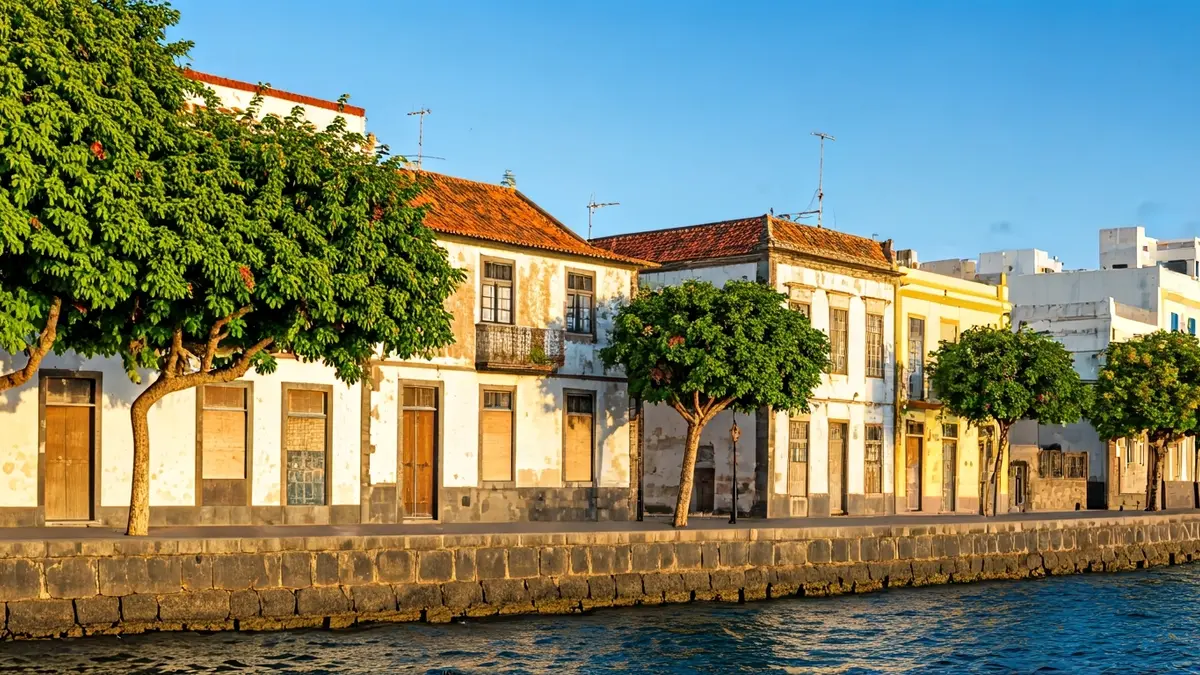
In the heart of La Orotava, in northern Tenerife, stand seven social housing units that, despite their idyllic design and historical significance, are in a worrying state of neglect. These buildings, constructed at the beginning of the 20th century, are notable for their spacious plots, gardens, garages, and porches, offering a high-quality social housing model that contrasts with current perceptions of such constructions.
Located on Paseo Domínguez Afonso, near the Quiquirá football field and the El Calvario area, these houses are part of the collective imagination of the town. Six of them are owned by the La Orotava Town Council, but five have been boarded up for approximately 15 years to prevent occupation, leading to their deterioration and making it impossible to easily assess their internal condition. A metal fence has been installed to restrict access, while the seventh dwelling continues to be inhabited by its private owners.
“"Two reports from the local Urban Planning department point to the 'ruinous' state of these houses and deny the possibility of restoring habitability."
The situation has sparked an intense political debate. Councillors from Asamblea por La Orotava, Manuel Pacheco and Paula González, have put forward proposals to rehabilitate the homes, arguing their historical value and the need to utilize them amidst the housing crisis. They suggest that the works would only require minor licenses and would be low-cost, disagreeing with municipal reports that indicate serious structural problems.
For his part, Felipe David Benítez, Councillor for Economy, Finance, and Heritage, has stated that there are reports from Urban Planning that describe the houses as “ruinous” and deny their habitability. Furthermore, a municipal heritage technician has denied their architectural and historical value. The local government, led by Coalición Canaria (CC), has proposed a budget modification of one million euros to demolish them and build a new housing block, a decision that Asamblea por La Orotava criticizes, pointing to the existence of 2,400 vacant homes in the municipality according to the General Urban Plan (PGO).
The left-wing political group has requested the protection of these homes from the Cabildo's Heritage department, considering them an icon of the municipality's main entrance in the past. Councillor Benítez has indicated that the final decision on demolition or rehabilitation will depend on the Cabildo's response, although the local government's stance appears to lean towards the construction of new housing.