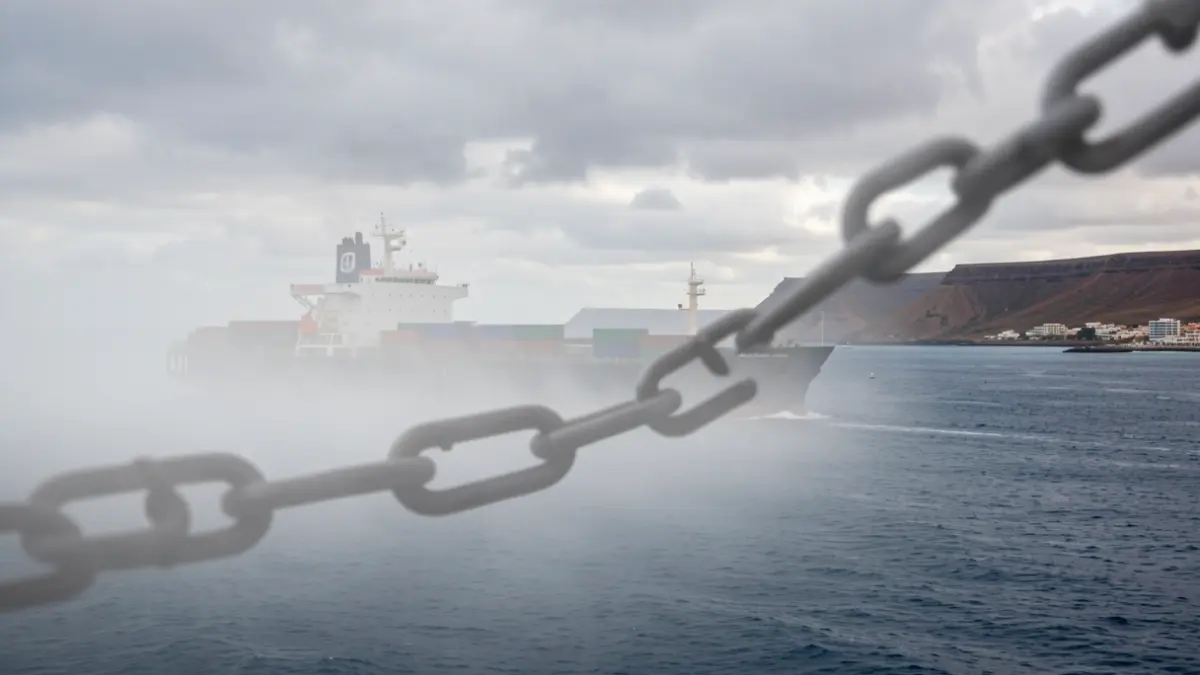
Relations between the Canary Islands Government and the State are described as «completely broken», according to regional executive sources. This tension became evident after the Canary Islands president threatened to prevent the Hondius from docking in Granadilla if it did not depart for Holland, a stance overruled by a resolution from the Directorate General of Merchant Marine that imposed the ship's entry.
In the disembarkation operation, which began on the morning of May 10, 2026, at the port of Granadilla, the absence of resources and institutional presence from the Canary Islands Government was notable. The operation was managed entirely by the Spanish Government, with the exclusive participation of its own resources.
Although the Canary Islands Health Service (SCS) had installed ambulances and a field hospital, sources close to the operation indicated that the Spanish Government ordered the withdrawal of SCS ambulances located near the command post. In this area, where the Minister of Health and the Minister of Interior were present, only UME buses and Civil Guard vehicles were visible, with no trace of regional resources.
“"The Canary Islands president wants to be the redeemer of the Canary Islands in the face of a possible contagion that would be the fault of the Spanish Government."
The lack of representatives from the Canary Islands executive contrasted with the broad presence of diplomatic corps members from countries such as the Netherlands, Argentina, Belgium, France, and the United Kingdom, who closely monitored the operation. Information about the disembarkation was provided by the State through press conferences, in a tightly controlled environment.