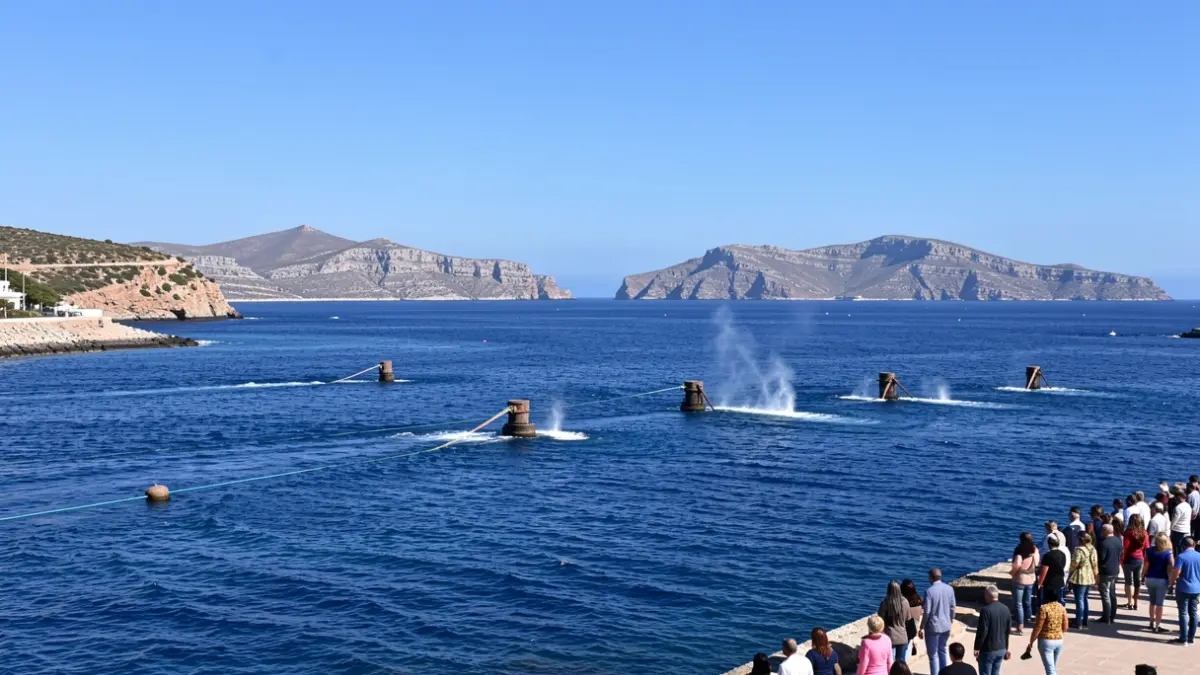
The coasts of the Canary Islands have 398 points from which water is discharged into the sea, five fewer than last year. Half of these emissions (51%) do not have authorization nor have they initiated the process to obtain it, although this does not necessarily imply they are polluting, according to Ángel Montañés, Director General of Ecological Transition and Fight against Climate Change.
Montañés assures there is no reason for «citizen concern» and maintains the possibility that a figure close to 85% of discharges will have authorization next year. Difficulties in achieving this normalization can be «both technical and documentary», affecting even strategic infrastructures like the Wastewater Treatment Plant (EDAR) of the theatre in Gran Canaria.
The Director General insists that, in the vast majority of cases, even without authorization, the discharges do not generate «environmental impact». If those that have initiated the process to operate with the correct paperwork but have not yet completed it are included, the rate of unauthorized discharges rises to 68.5%. The objective of the Ministry of Ecological Transition and Energy is to significantly reduce this rate in the final months of the legislature.
Montañés' optimism is based on the momentum given to these works in recent years, highlighting the «many established conversations» and the work developed in this area. He acknowledges that «procedures are extremely complex», which delays the final resolution.
The ministry's competence is limited to «authorizing discharges in accordance with current legislation», while the island councils (cabildos) and municipalities handle the bulk of the work. Efforts are being made jointly with them to improve the certification of discharges. Tenerife, through its Island Council and municipalities, is cited as a more active player working on its own initiative, unlike Gran Canaria, where «concern» about this issue is more recent, explaining «different speeds» in addressing the problem.
Despite the differences, the interest in reducing the pressure from unauthorized discharges exists on all islands. Montañés estimates that Tenerife will reach the goal in «a few years», which could serve as an example for other islands.
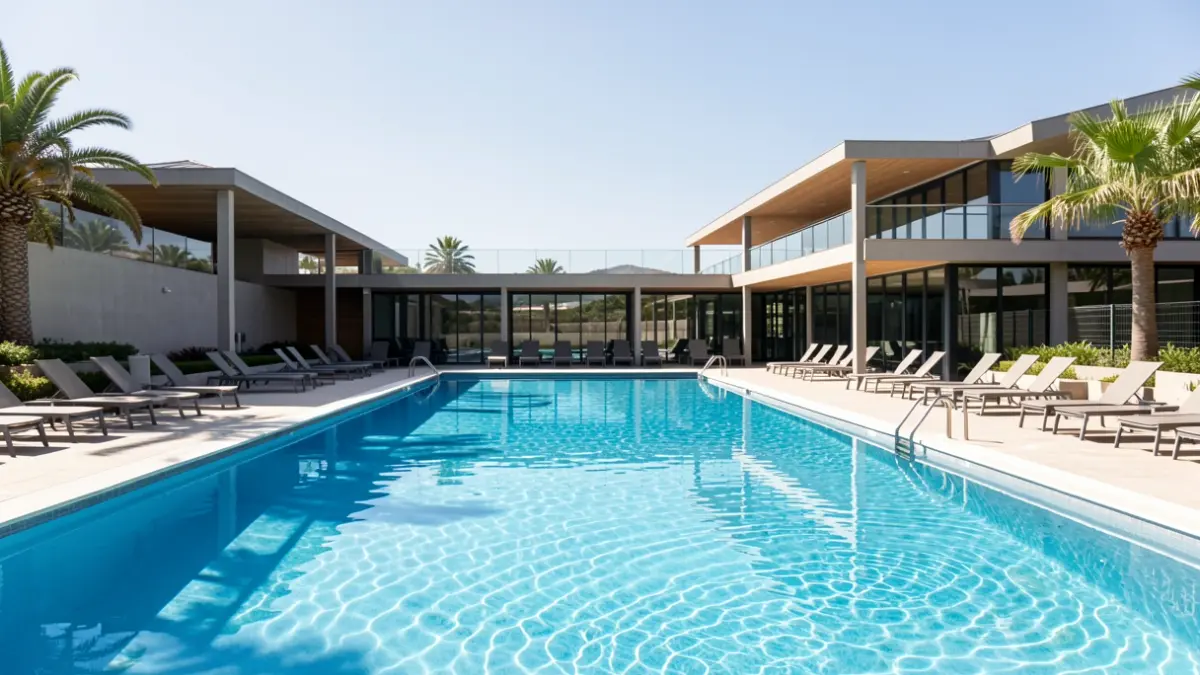
The census of discharges was first released last year. Inspection work has continued, finding new discharges and deregistering others, such as a swimming pool that no longer needs to discharge into the sea thanks to a new system. Technological advancements allow for the detection of discharges that previously escaped control.
Larger discharges are controlled by the autonomous community, whose main role is also to expedite authorization processes. By island, Tenerife has the largest volume of discharge points (176), followed by Gran Canaria (116). Regarding unauthorized discharges, Tenerife has 73 points and Gran Canaria has 70.
These two islands, with greater economic activity and tourist volume, present higher water treatment needs. They are followed by Fuerteventura (38) and Lanzarote (36), islands with a high incidence of the accommodation industry in their respective GDPs. La Palma (17), La Gomera (11), and El Hierro (4) complete the count.
The processes for the regeneration of wastewater implemented on all islands maintain the hope of the Director General of Ecological Transition and Fight against Climate Change for an Archipelago with zero risk of polluting discharges. Ángel Montañés affirms that there is no cause for alarm and that the general quality of coastal waters «is good».